



Best Film Schools
Has a movie ever stuck with you, or even changed you as a person? Or maybe you’ve left a movie thinking, “Man, I bet I could make a better movie than that.” If that sounds familiar, film school could be the path for you. The best film schools are the perfect place to hone your sense for the craft and meet fellow filmmakers. They’re also a great place to make connections with people who can help you get your film career off the ground.
In this article, we’ll explore everything you need to know about finding and applying to the best film schools. In particular, we’ll talk about:
- Why you might want to attend one of the top film schools
- Courses of study and degrees at the best film schools
- How to apply to the best film schools in the world (or just one near you)
- The best film schools by major and location, including the best film schools in California and New York
- How to decide if filmmaking school is the right choice for you, and more!
Before we start comparing the best film schools, let’s consider the merits and purpose of film colleges and programs.
Why choose film school?
The best film schools are perfect for aspiring filmmakers to learn the craft in a community of their peers. They provide a structured environment for learning, with thematically rich and technically sound assignments designed to hone your skills. Instructors and professors at top film schools are available to provide immediate, specific feedback that sparks growth. But the courses are only the beginning.
At the best film schools, students have access to state-of-the-art equipment and facilities. Sound stages, camera and lighting rigs, sound systems, editing suites and more are available for student work at most film colleges. The best film schools in the world have even more amenities on the cutting edge: think motion capture rigs and VR/AR labs. Top film schools provide tools for students to push the boundaries of filmmaking.
Of course, students in film programs study in a cohort. Collaborations with classmates for assignments or beyond can unlock new opportunities for creativity. Student crews at the best film schools mirror industry production teams, preparing them for the industry. Indeed, they may share many qualities with pre-professional programs to arm students with experiences and connections before they graduate.
Networking opportunities abound at top film schools, with the aim of enriching students’ future opportunities. Film schools in California and Croatia alike have alumni networks that add to on-campus programming and stay with you for life. But the best film schools in the world open even more doors, providing access to film festivals, showcases, internship pipelines, and industry partners.
What do you study in film school?

Film programs at the best film schools tend to share several core elements. Across the board, the best film colleges combine technical skill development with storytelling fundamentals and visual communication. It’s the curricular and extracurricular opportunities available to actually cultivate these skills that differentiate the best film schools.
Core courses don’t change too drastically between top film schools. Directing, cinematography, editing, screenwriting, producing, sound design, film history, and theory are all common requirements for film majors. The exact requirements, subject, and resources can of course vary by school.
Advanced electives, on the other hand, can vary widely between programs. The same film programs may even have different offerings each semester or academic year. These special courses can include topics like color grading, documentary filmmaking, animation/VFX, experimental media, and new media storytelling.
Just as filmmaking is hardly formulaic or multiple-choice, the best film schools go beyond classroom time. Students typically complete multiple projects including short films, scene exercises, capstone films, and production portfolios. At top film schools, students may even specialize within filmmaking, requiring more unique projects in close collaboration with faculty.
Degrees for Film Majors
Undergraduate students at the best film schools can choose from several film-related majors/degrees depending on their interests. After all, filmmaking is not a single skill or discipline. It makes sense, therefore, that there are a number of film degrees out there.
Let’s look at some of the core film-related majors and specializations. Remember that even at the best film schools, students may major in Film Production or Film/Media overall. The below may be designated as concentrations or specialties.
Film Degrees
Film Production / Filmmaking
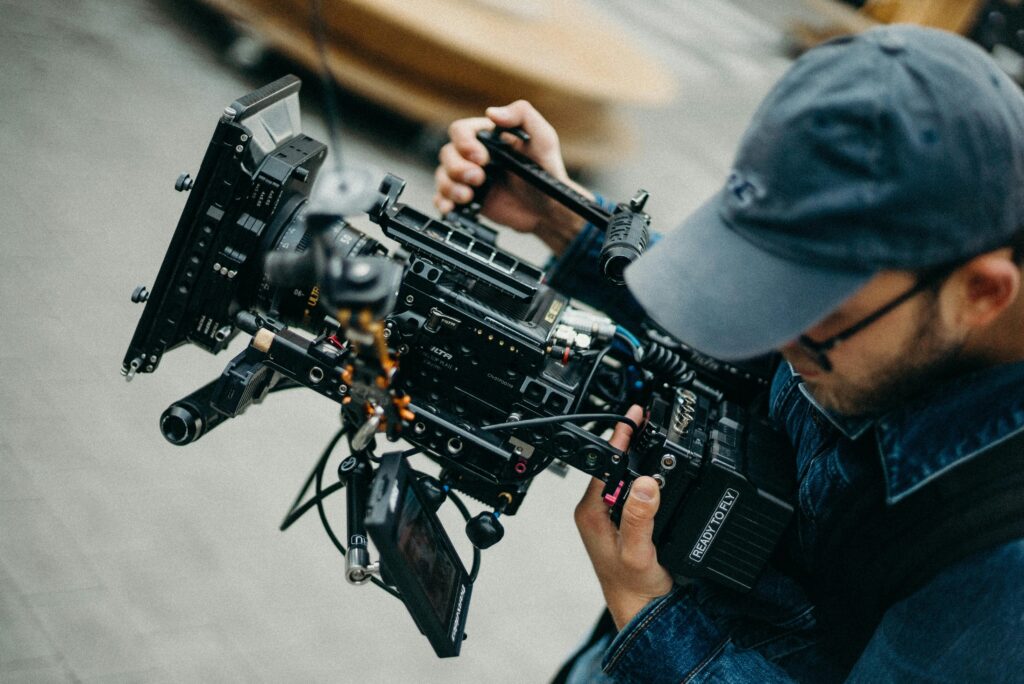
This can be a catchall term, but there is actually a difference between film production and producing. Film production and filmmaking are more about the hands-on process, encompassing cinematography, directing, editing, and more. On the other hand, producing often refers to the management side of filmmaking. Think managing budgets and timelines, assembling teams, and overseeing the process as a whole.
Screenwriting
Specializing in screenwriting equips you for a career in writing scripts for film or TV across various genres. Even if you’re interested in one particular genre, get ready to practice writing diversely to get your degree.
Animation (2D/3D/Experimental)
With the rapid development of VFX technology, animation specializations can now encompass animation as well as various computer graphics techniques.
Film & Media Studies
This encompasses film theory, history, and the cultural impact of film as an art form. While present in some form in most film curricula, it can also stand as a major on its own.
Cinematography
Training in cinematography focuses on topics like lighting and composition, both in still photography and video.
Documentary Production
Documentary production is an involved process, requiring proposals, story development, coordination with stakeholders, and more.
Editing / Post-Production
After filming wraps, editors are responsible for assembling the raw material into a cohesive storytelling experience. Post-production also includes adding color grading, sound design, scoring, and visual effects.
Directing
Being a director is about much more than sitting in the director’s chair; it’s about bringing an artistic vision to life. Directors play a crucial role in mediating relationships among actors and crew in addition to their artistic responsibilities.
Film majors may be offered as BA or BFA degrees depending on the school and curriculum. A BA is a broader liberal arts curriculum with room for electives; it typically has lighter production requirements. In contrast, a BFA entails intensive artistic training with more studio courses, longer production sequences, and portfolio development. Depending on your career aspirations, skills, and interests, you should consider whether you want a BA or BFA.
Applying to Film School
For the most part, applying to the best film schools looks very similar to applying to other top schools. Common admissions components like transcripts, recommendation letters, a personal statement, and a resume are required. Note that your resume should emphasize creative endeavors related to what you’re going to study. If you’re applying to colleges with film majors, the process may end there; for intense film programs, though, be prepared.
Competitive programs at the best film schools often have film-specific requirements. Sample films, scripts, photography portfolios, or creative prompts may be requested for admissions committees to see your vision and style. They may also require artistic statements describing your influences, style, and goals. Depending on your school or program, you may also need to submit storyboards, art portfolios, or visual storytelling assignments.
It might go without saying, but when you’re assembling applications for film programs, submit polished work. Your materials should demonstrate strong storytelling skills, even if your technical skills are still developing. Admissions officers understand that you’re still young and probably lack formal training; they don’t expect a Martin Scorsese level of work. Admission to the best film schools requires a demonstration of drive and vision that can be refined with further education.
Of course, the best film schools in the world and in the nation are extremely competitive. Don’t be surprised to see single-digit acceptance rates when doing your research. Even early deadlines can have large, well-qualified applicant pools. All this drives home the importance of starting your application early.
Top 10 Best Film Schools in the US
Of the best film schools in the world, many of them are in the United States. Let’s take a look at the ten top film schools in the US.
Top 10 Film Schools in the US
University of Southern California
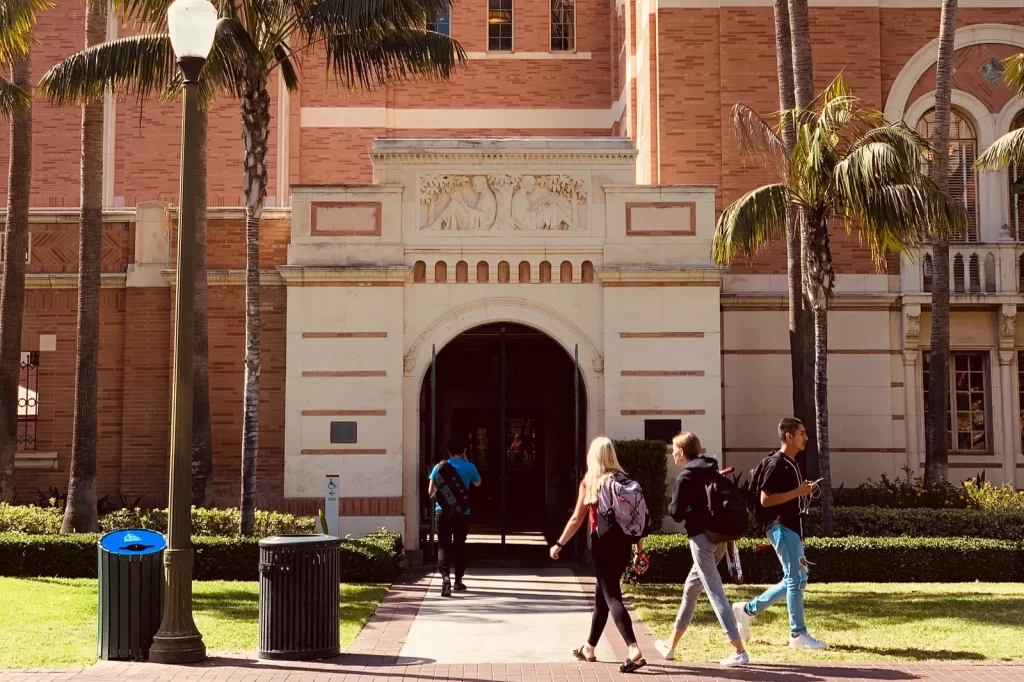
Located right in Los Angeles, it’s little surprise that the University of Southern California consistently tops film school rankings. For nearly a century, USC has been one of the best film schools in the world, and a generally top-rated California university. USC alumni have collectively received hundreds of prestigious awards and spearheaded some of the highest-grossing films of all time. For undergraduates just starting their film career, USC offers both BAs and BFAs in Cinematic Arts, Film and Television Production. You can’t go wrong with the Hollywood Reporter’s #1 ranked school.
New York University
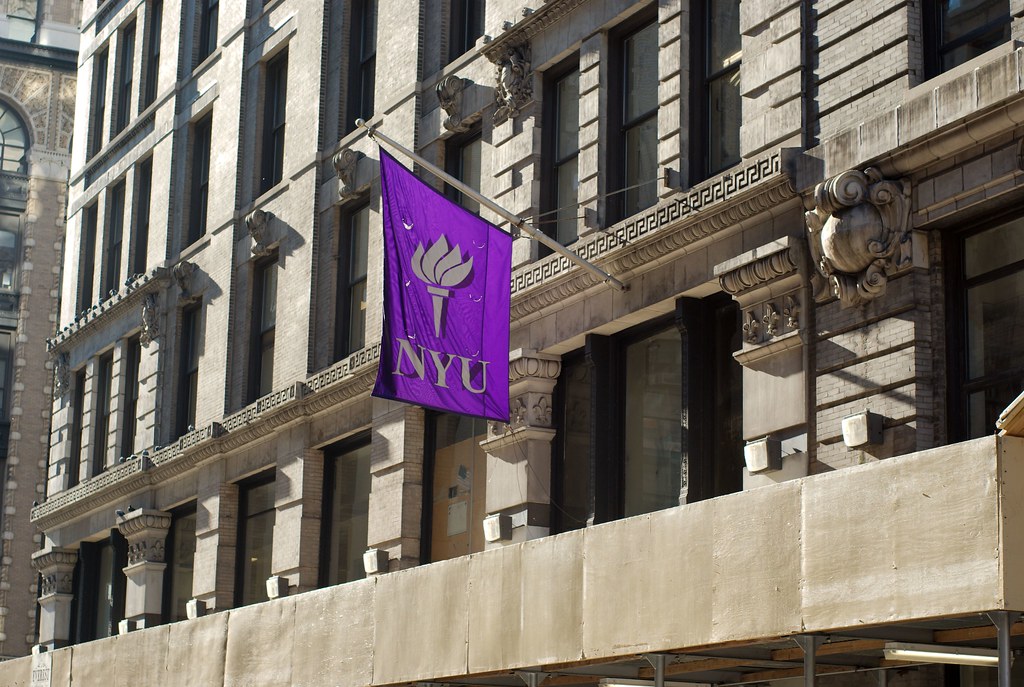
Applicants to New York University’s Film & TV major can look forward to earning a BFA in Film and Television. NYU only offers BFA degrees, speaking to the experiential focus of their curriculum. The curriculum spans fundamentals and core production skills to advanced, niche topics like experimental production and short narrative.

Chapman University
The Dodge College of Film and Media Arts at Chapman University is a powerhouse of film education. Another Southern California university, Chapman leverages its vast alumni network to host superstar guest talks, one-of-a-kind mentorship opportunities, and more. Students can choose from numerous BAs and BFAs in topics like broadcast journalism, public relations, acting, and production.
Loyola Marymount University
Another university that takes advantage of its proximity to Hollywood, Loyola Marymount University also consistently appears in film school rankings. In addition to majors like production and animation, LMU also offers a recording arts course of study for aspiring sound engineers. Starting in 2026, the university will offer a BFA for Film and Television Production.

UCLA
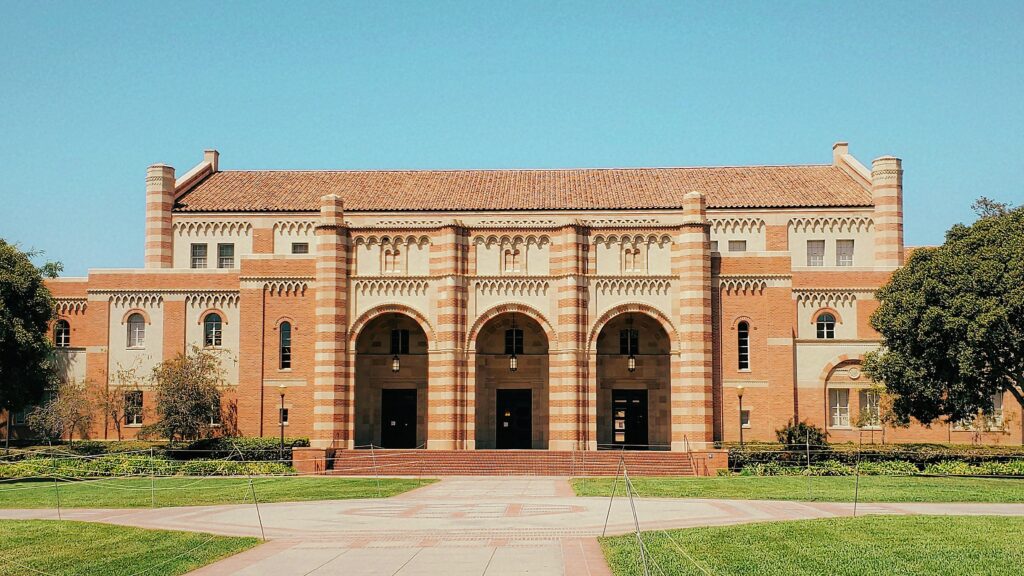
The next school on our list of the best film schools is from the UC system. UCLA’s undergraduate film program may only offer one BA in Film, Television & Digital Media, but don’t be fooled. It’s just as rigorous as anywhere else, with hands-on coursework and internship opportunities. Seniors are also required to take two courses in a concentration such as animation or screenwriting.
Columbia University
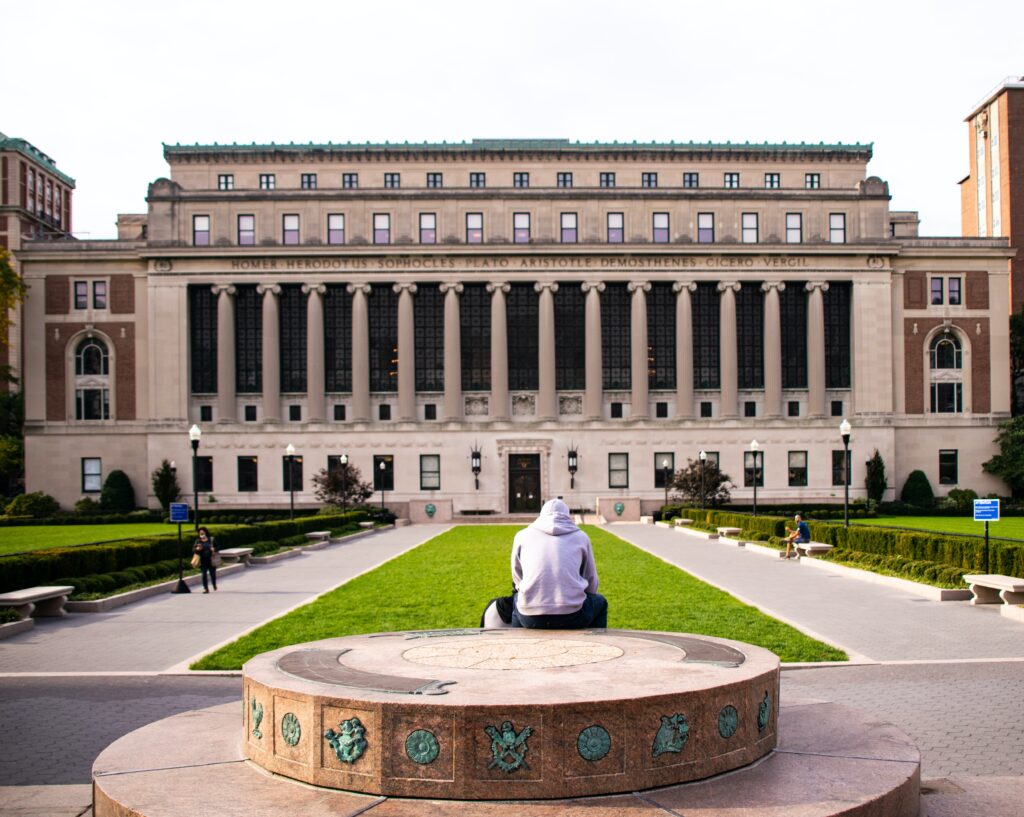
In contrast to the other five schools, the Film and Media Studies major at Columbia is scholarly and writing-heavy. While workshops in filmmaking and related topics are part of the curriculum, they aren’t the focus. Nevertheless, alumni have gone on to rich careers in all areas of film, from screenwriting and producing to distribution.
UT Austin
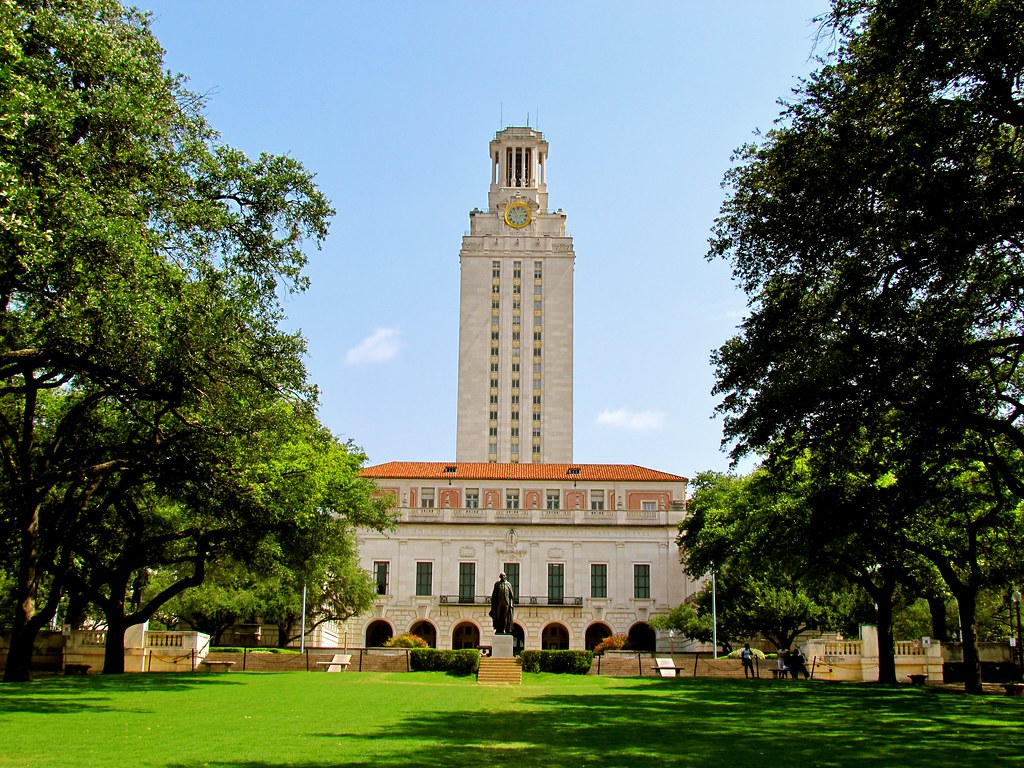
Another unique entry on the list of best film schools, UT Austin offers a BS — not BA/BFA — in Radio-Television-Film. As might be expected, this program is very broad, covering subjects like video game writing and queer media production alongside the standards. Within the diverse array of courses, students at UT Austin are sure to find a place for their interests and goals. Alumni have gone on to have prestigious careers in all corners of the industry.
University of North Carolina School of the Arts
Students looking to study film at UNCSA pursue a BFA with a concentration in animation, cinematography, directing, editing & sound design, producing, production design, or screenwriting. UNCSA blends practical filmmaking with a liberal arts courses, making this one of the best film schools for students looking for a well-rounded education.
Emerson College
With campuses in Boston, Los Angeles, and the Netherlands, Emerson is one of the best film schools in the world. Students can get BAs in Media Arts, with both BA and BFA options available for Media Arts Production. Additionally, in partnership with the Paris College of Art, Emerson College offers a Global Bachelor of Fine Arts in Film Art. There are also cross-departmental programs exploring subjects such as theatrical design.
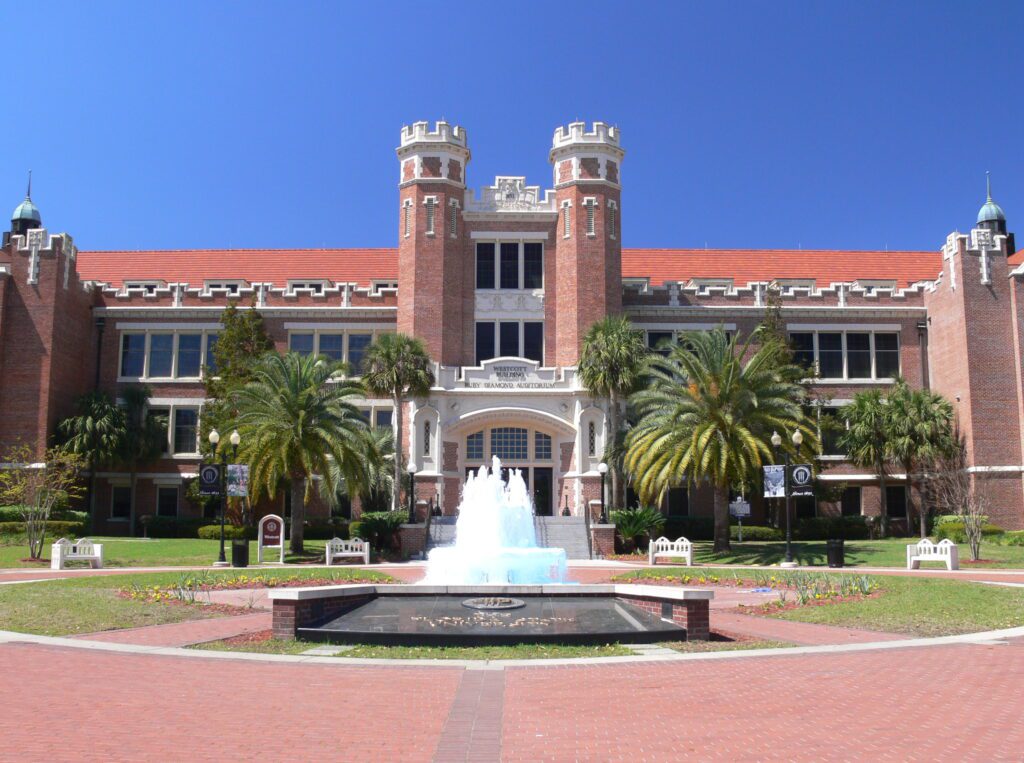
Florida State University
At FSU, students can earn a BFA in either Animation and Digital Arts or Production. The program runs on a conservatory model, emphasizing one-on-one mentorship, as well as opportunities to collaborate and showcase. The university also hosts the Torchlight Studios Center for Cinematic Innovation, with a sound stage and expansive post-production facilities.
As you can see, the best film schools in the US cover the whole gamut, from experiential learning-based BFAs to scholarly BA programs. Although we’ve chosen to focus on undergraduate filmmaking programs for our top 10 list, there’s one more school we want to give a shoutout to:
American Film Institute
No list of the best film schools would be complete without mentioning the AFI Conservatory. Countless successful filmmakers have graduated from this Los Angeles-based program, working on movies and shows like The Queen’s Gambit, American Horror Story, Big Little Lies, Midsommar, Black Panther, and The Dark Knight. AFI offers MFAs (Master of Fine Arts) in cinematography, directing, editing, producing, production design, and screenwriting.
When exploring film school rankings, keep in mind that everyone has a different opinion on what is considered “the best.” The reality is, this list is not exhaustive, and there are plenty more great film schools located across the country and around the world. So, whatever your goals are, there’s guaranteed to be a great film school that has a place for you.
If you’re looking for the best film schools in California or New York, keep reading. The next two sections are for you.
Best Film Schools in California
With Hollywood based in Los Angeles, it’s no surprise that California is home to so many film schools. Half the schools on our top 10 film colleges list are in CA! These institutions, being so close to Hollywood and its stars, unlock opportunities like studio internships and access to industry professionals. It’s hard to beat the kinds of guest lineups found at film schools in California.
Here are a few other prominent film schools in California, each with their own appeal.
Top Film Schools in California

CalArts
While CalArts offers a BFA in Film & Video, it’s perhaps best known for animation. This titan in the film industry has turned out hundreds of prominent alumni across animation, film, and television. Whatever you end up studying, you’re sure to receive an intensive, hands-on education.
San Francisco State University
At SFSU, students can pursue a BA in Cinema along with concentrations in Filmmaking or Cinema & Media Studies. The program combines scholarly work like critique with production experience.
Santa Monica College
Unlike the other film colleges on this list, the Santa Monica College film studies program doesn’t offer bachelor’s degrees. Instead, students can pursue associate’s degrees in film production or film studies. That doesn’t mean it doesn’t belong among the best film schools, though. SMC’s program is recognized by several high-profile film festivals and awards organizations. Not everyone wants or needs a bachelor’s degree from their filmmaking school, and SMC gets that.
Now, we’ve taken a good look at some of the best film schools in California. But Hollywood isn’t the alpha and omega of film these days. So, let’s check out some of the best film schools on the east coast.
Top New York Film Schools
Some of the best film schools in the world may be in SoCal, but don’t underestimate New York film schools. There are plenty of top film schools like NYU and Columbia, which we covered above. Given New York’s rich film and television scene, it’s no surprise that aspiring filmmakers want their education here.
Like film schools in California, film colleges in New York provide students with ample opportunity to get real-world experience. Many film festivals and studios have a major presence in New York, to say nothing of the many networking opportunities available. There are also unique opportunities to intern on programs like Saturday Night Live or late night shows.
Top Film Schools in New York

New York Film Academy
As the name implies, New York Film Academy exclusively offers degrees in film and media arts. It’s not like other general-purpose colleges with film majors. In addition to BA and BFA options, they also offer associate’s and master’s film programs. Their major programs range from filmmaking and acting to 3D animation and game design.
Ithaca College
In contrast to most of the other film colleges we’ve discussed, Ithaca College isn’t in or proximal to a major city. It’s one of several more remote New York film schools. Nevertheless, it stands among the best film schools with a BFA program in film. Earning the degree requires coursework in production as well as complementary studies of critique and additional areas like animation.
Syracuse University
Another remote school, Syracuse University offers a BFA in film, with a focus on production in independent filmmaking. They have a wealth of sound stages, equipment, editing facilities, and more for students to use in their work. Students also have opportunities to study abroad in Los Angeles, Bologna, or Prague. Of course, it’s not all practice — coursework also involves academic film studies.
By now, we’ve looked at several film schools in California and New York, which is useful if location is important to you. We’ve even seen some schools that aren’t in bustling metropolitan areas. But what if you’re interested in a particular specialization for your film degree?
Best Film Schools by Major
For some students exploring the best film colleges, general lists of top film schools will suffice. However, many others who are already considering a certain concentration may need to look further. Earlier, we covered various types of degrees and concentrations. How do these specializations look compared with our list of the 10 best film schools?
Overall, USC and NYU are some of the best film schools in the world for many common specializations. Producing, directing, screenwriting, cinematography, and animation are all undeniable strengths of these two institutions. On the other hand, film production, which prioritizes the filmmaking process, is strong at schools like Chapman University and UT Austin. Emerson College has a particularly good editing and post-production program; Columbia’s documentary program stands out, too.
But if you’re considering specialties, you may also be compiling your own lists of the best film schools. Film majors like animation can open a whole other can of worms, opening your list up to lesser known art schools. Within the world of your intended specialization, they may be powerhouses. Animation hopefuls look to CalArts, of course, but also to art and design schools like Ringling College of Art and Design, Rhode Island School of Design, SCAD, the School of Visual Arts, and the Pratt Institute. Depending on your intended area of expertise, your list may look very different from anyone else’s.
If you’re already considering a specialization, even if you aren’t completely certain, do your research. Make dedicated college lists of the best film schools for interesting concentrations in addition to a more general list. It never hurts to prepare yourself with plenty of knowledge so you can make an informed choice.
Should I go to film school?
Perhaps the most important question to ask yourself is not “What are the top film schools?” but “Is film school right for me?”
Unlike some other fields, you don’t need to attend one of the best film schools to start a career in film. That’s not to say there isn’t value in filmmaking school. As noted above, there are a plethora of benefits to attending one of the best film schools. From structured learning with mentorship and peer support to access to state-of-the-art facilities, filmmaking schools have a lot to offer. Graduates of the best film colleges join extensive alumni networks, which they can leverage later on.
However, there are also undeniable drawbacks to the best film schools. Like most other universities nowadays, art schools are expensive, costing tens of thousands of dollars per semester without aid. That’s assuming you get in, since top film schools have extremely competitive admissions cycles. Even after graduation, your career may not be smooth sailing. Film and TV are project-based fields, meaning an unstable job market often without long-term security.
There is no universal answer to whether film school is right for you. A career in film and TV isn’t gated behind education — independent filmmakers have been around for decades. With the digital age, it’s never been easier to make a name for yourself as a filmmaker online. Don’t be afraid to put your self-made films out there by participating in small-scale film festivals and exhibitions.
Depending on your interests, you may be able to find entry-level jobs to gain marketable skills. Local film clubs or interest groups can introduce you to like-minded people and future collaborators. Even community theatres can provide valuable production experience and set you up for future opportunities.
5 tips for choosing the right film school
If you’re set on film school, the next step is to choose the right one. We’ve listed several top film schools already, but the best film schools for you personally will differ. Here are some steps you can take to choose a film program.
5 Tips to Choosing Your Film School

1. Research course offerings.
Even the most hands-on production programs have coursework. Get a sense for the curriculum by researching each university’s film department course catalog. In addition to required core classes, look at possible electives and even special courses, internships, and experiential learning opportunities. Just looking at course titles might pique your interest in something entirely new.
2. Find out equipment and facilities available for students.
Even if you don’t know much about the particulars of filmmaking yet, it’s helpful to learn about available amenities. The best film schools each have different strengths, and part of that is what students can use in projects. Are you interested in sound engineering? Make sure the film colleges on your list have dedicated facilities for recording and mixing. Are you interested in shooting on celluloid or Super 8? Look for schools that emphasize access to niche formats and development equipment.
3. Explore student work and campus life.
A large part of the appeal of the best film schools is living and learning alongside other students. Film schools usually have showcases of student films, sometimes even sorted by subject or genre. These can give you a sense of the calibre of film majors at the school. Take a look at campus life, too: are there any clubs or organizations that fit your interests? Remember that you’ll be living and learning on this campus for several years; try to choose one where you’ll be happy.
4. Consider outcomes and post-grad life.
In the end, you’re attending film school to improve your future prospects. The best film schools emphasize graduate outcomes like the percentage of students employed within a year of graduation. If your goals include specific jobs or roles in the industry, research relevant outcomes for schools on your list. This can also include researching career development and support services, which can support internship placements. Some universities also offer career support to alumni, so keep an eye out for that information.
5. Calculate costs and aid.
Unfortunately, the best film schools are far from free; at the same time, they usually offer some form of aid. Consider your personal financial situation and research costs of attendance. Some film programs may have mandatory purchases of equipment, course materials, or subscriptions. Try to have open discussions with your parents or guardians about the cost of college and your financial plan. Research financing options like external scholarships or grants if university aid doesn’t seem sufficient.
Of course, there are many other steps you’ll take when deciding on the best film schools for you, like considering location and size. Every journey is different. Whatever you do, don’t skimp on the research phase. The last thing you want is to be ankle-deep assembling portfolios and revising personal statements, only to realize your colleges don’t fit.
Best Film Schools – Final Takeaways
In this article, we covered a lot of ground on the best film schools. We established the different subjects or concentrations often found in film programs, from cinematography to sound engineering. We saw 10 of the best film schools in the world, as well as some top film schools in California and New York. Additionally, we considered the merits of attending film school for breaking into the industry, plus some downsides.
Ultimately, choosing a university is an intensely personal decision with a lot of factors involved. Will you choose from among the best film schools? Do you have specific wishes like a suburban setting, or staying close to home? There are endless factors that will influence your decision and the kinds of applications and art portfolios you submit. Honestly, it can be pretty overwhelming.
Fortunately, you don’t have to do it alone: CollegeAdvisor can help. We have hundreds of free articles and webinars covering scholarships, admissions deadlines, and everything in between. Need more support? Our talented admissions experts are ready to work one-on-one with you on every step of your admissions journey. From researching majors and colleges to securing recommendation letters and preparing for interviews, we’ve got your back. Schedule a free consultation with us today!

This article was written by Gina Goosby. Looking for more admissions support? Click here to schedule a free meeting with one of our Admissions Specialists. During your meeting, our team will discuss your profile and help you find targeted ways to increase your admissions odds at top schools. We’ll also answer any questions and discuss how CollegeAdvisor.com can support you in the college application process.