



College Planning for 9th and 10th Graders
If you’re already thinking about college planning, you probably have some big goals in mind for your future. But, you might be wondering: where should you start? Well, preparing for college isn’t about following a strict plan or checking off a list of tasks. At its best, early college planning is about exploring your interests and discovering who you are and what matters most to you before applications and deadlines take over. The more you understand yourself and what you enjoy, the easier it will be to make thoughtful decisions about your next steps after high school.
This guide explains how to prepare for college in 9th and 10th grade. We’ll cover the essentials of early college preparation, including:
- What looks good on college applications
- When you should start planning for college
- How to get good grades in high school
- Getting involved in the right extracurriculars
- How to get into a good college, and more!
Learning how to prepare for college early helps to build confidence and reduce stress later on. So, what’s the first step in effective college planning? Well, it comes down to understanding what admissions committees look for when reviewing applications.
What looks good on college applications?
Colleges in the US typically take a holistic approach to college admissions, meaning they evaluate students on various criteria. Grades, course difficulty, activities, and personal context all factor into the decision process. As such, each of these factors plays an important role in college planning.
Grades and Course Difficulty
When it comes to your college plan, academics play a huge role in determining what kind of school you can go to. Afterall, you’re applying to continue your education, so it makes sense that your grades and GPA are of the utmost importance.
However, you don’t need to be a straight-A student to get into a great college. Demonstrating sustained effort and growth over time matters more to college planning than having a perfect record. Colleges also want to see if you’ve challenged yourself beyond the typical high school curriculum. This includes taking honors, AP, or even dual enrollment courses–even if it means a lower grade on paper. For example, a B in a challenging course can carry more weight than an A in a standard class.
Knowing how to prepare for college academically includes choosing classes that make sense for your long-term goals. For instance, if your college goals include studying biochemistry at a prestigious school like Yale or Stanford, you’ll need to challenge yourself with honors and AP STEM courses. But if you’re interested in attending a BFA program at SCAD or RISD, taking an AP Art course may be more important to your college planning strategy than taking AP Physics.
Activities
While your classes make up the core of your college preparation, what really differentiates you from other applicants are your extracurriculars. Colleges want to see what you choose to dedicate yourself to outside of class. This tells them what interests you, what you care about, and how you’ve already begun to shape your life, even though you’re still in high school.
In the context of college planning, the best extracurriculars are the ones that demonstrate the highest level of involvement. For instance, being the president of a club shows more commitment than being a regular member—so does being in a club for four years instead of just one. Additionally, clubs that relate to your academic interests show colleges you’re committed to your studies and will continue to apply yourself in college and beyond.
Personal Context
Where you went to school and the opportunities you had available to you is also taken into consideration. Not every student has access to the same classes, extracurriculars, or college planning resources. Additionally, some students have to balance school with family commitments or part-time jobs. Others manage serious challenges and hardships that affect their ability to succeed in school.
Colleges understand that everyone has had their own journey, and no two students have the same experiences. However, they do expect you to take advantage of the opportunities that have been afforded to you. Effective college planning involves understanding your particular circumstances and figuring out how to make the most of them.
When should you start planning for college?

The reality is, effective college planning begins in 9th grade. But that doesn’t mean you need to jump straight into visiting colleges or writing college essays. Early college planning centers on academic habits and thoughtful choices, not applications. And you don’t need to have a college plan to start preparing. Long before senior year rolls around, you can start:
- Developing your own study habits
- Building a strong work ethic
- Figuring out what you enjoy (and what you don’t)
- Getting comfortable with challenges
- Learning about different careers
- Reflecting on your interests and goals
Starting college planning early is about building a great foundation. Becoming a great student and well-rounded person isn’t something that happens overnight — it takes years of dedication and intentional action.
While you don’t need to take APs and honors courses freshman year, one of the best ways to set yourself up for success is to find your own learning style. What do you need to do to understand and retain new information? You could try making flashcards, handwriting your notes, or even explaining concepts to your parents or siblings over dinner. The most important thing is figuring out what you need to do to be successful.
Another advantage of learning how to prepare for college early is having time to explore interests without pressure. For instance, if you’re not immediately drawn to a potential field or major, that’s totally fine! Signing up for a summer career exploration program, or a pre-college program in a subject not offered at your school, could inspire a totally new path you wouldn’t have otherwise discovered.
College Preparation Timeline
During these first two years of high school, you do not need to worry about narrowing down your college list or drafting college essays. If you want to get a jump start on college planning, here’s a timeline to get you started:
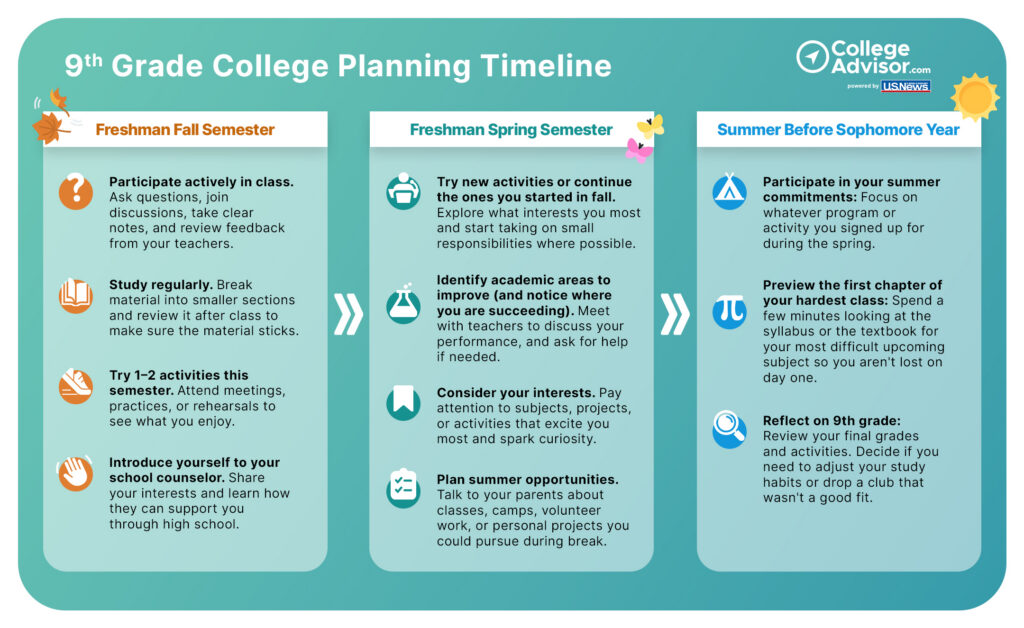
9th Grade College Planning Timeline
Your first year of high school is all about adjusting to high school academics, understanding course expectations, and exploring activities.
10th Grade College Planning Timeline
Your second year of high school should build on your freshman year through academic consistency, clearer interests, and deeper involvement.
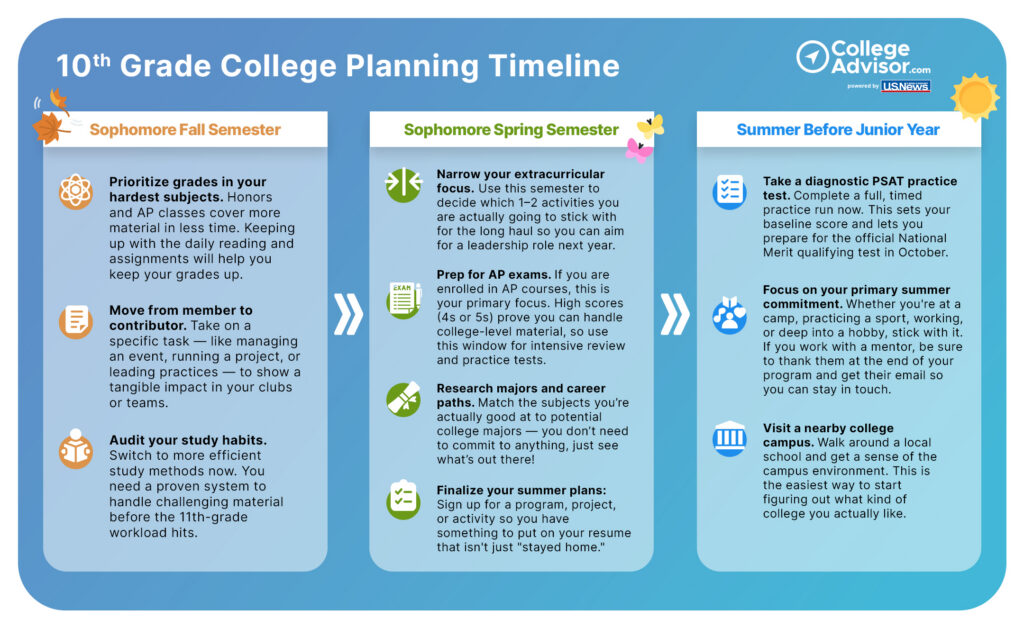
As you consider this timeline, think of it as a natural progression rather than a checklist that must be completed perfectly. Letting your first two years of high school be about exploration takes the pressure off of college planning while also clarifying your college goals.
Another way to remove unnecessary pressure? Working with a knowledgeable college counselor who can advise you on what classes to take when and worthwhile extracurriculars to get involved with. Introducing college help early helps normalize college planning as part of the high school experience. And, with early college help, you can stay focused on the present moment instead of spending time worrying about the future.
How to Prepare for College in High School: FAQ
Starting high school can bring a lot of questions: Which courses should I take? What activities will matter later? How do I even start planning for college? This section tackles those questions head-on, giving practical guidance that’s useful for every student, including first-generation college students and anyone who is new to the college application process.
Here, you’ll find answers to five common questions about college planning and actionable steps you can take now to set yourself up for success. To start, let’s answer the question: do colleges look at freshman year grades?
Do colleges look at freshman year grades?

Yes, when reviewing your application, college admissions officers will see your freshman year grades. Your freshman year grades are reported on your transcript, which shows all of the classes you’ve taken throughout high school and the grades you got in them. It also shows your GPA, the average of all of your grades.
While we typically think of grades on a letter scale (A, B, C), your GPA is usually calculated on a four-point scale:
- A = 4.0
- B = 3.0
- C = 2.0
- D = 1.0
You can calculate your GPA by adding up all of the grades you received and dividing by the total number of classes you took. By this logic, your freshman year grades directly impact the GPA you report on your college applications.
Getting all As and Bs in the first half of high school builds a strong foundation for a high GPA. Doing well in standard courses also prepares you to take more advanced honors and AP courses later on. But don’t let less than stellar grades keep you from your college goals.
Let’s say, at the end of freshman year, your grades are a mix of B and Cs. As you think about how to prepare for college, it’s important to focus on the future. Colleges look at performance trends over time rather than isolated semesters. Excelling in your sophomore and junior years, especially in advanced courses, shows colleges your true academic potential.
Which extracurriculars matter for college?
One of the main benefits of early college planning is getting involved in meaningful extracurriculars. Extracurriculars help colleges understand your interests and priorities, and they give colleges a glimpse into how you choose to spend your time outside of school.
When planning for college applications, many students wonder what extracurriculars will give them an edge in the admissions process. Truthfully, colleges do not look for or have a preference for specific activities. Being president of a school club or a state champion won’t guarantee you admission at your dream school. Neither will spreading yourself thin across countless activities trying to achieve a “perfect” mix of athletics, academics, and community service.
What really matters for college planning? Demonstrating commitment and growth. The best extracurriculars for college are the ones that:
- Teach you a new skill
- Push you outside your comfort zone
- Provide opportunities to take initiative or lead
- Allow you to contribute to a project or cause that matters
- Encourage teamwork and collaboration
- Highlight your progress and achievements
- Help you explore and deepen your interests
- Give you a sense of accomplishment
A thoughtful approach to how to prepare for college allows for natural development. Investing time into the things you really care about often inspires more action, helping you step into leadership roles with motivation and confidence. And, with early college help, you can start building momentum now instead of scrambling to sign up for more extracurriculars junior year.
The best part about planning for college early? The opportunity to get involved in different activities over summer break! There are plenty of summer programs geared toward career exploration, specific majors, and everything in between.
How early should I start preparing for college application essays?

Simply put, you do not need to start writing essays until the summer before your senior year. However, during this stage of college planning, you can start setting yourself up for success by building up core skills.
Essay preparation at this planning stage happens indirectly through classes, reading, and self-reflection. Developing your writing skills, which includes clearly communicating your ideas and effectively answering a given prompt, will give you the tools you need to write great college essays later on. Reading and spending time thinking deeply about different topics also helps you develop your own ideas and opinions.
The experiences you have now can also shape stronger essays later. Getting involved in extracurriculars, continuously learning and growing from the challenges you face, and following your curiosity will give you plenty of moments to reflect on in your essays.
Still wondering how to prepare for college essays before junior year? Here are three tips:
Focus on your English classes.
Your English classes are more than just reading lists — they’re where you learn to tell your own story. Mastering the art of clear, persuasive writing now means you won’t be struggling to find the right words when it’s time to show colleges who you are and what you’ve achieved.
Keep a journal.
You don’t need to tackle essay prompts to get a head start on college planning. Instead, focus on capturing the “now.” Writing down how you feel about big moments helps you figure out what truly matters to you, making it much easier to build a meaningful college plan later on.
Practice writing in your own voice.
AI is a powerful tool for brainstorming, but it can’t replace your personal story. Start practicing the balance now: use technology to spark ideas or catch typos, but keep your writing human. It’s the only way to ensure your applications and assignments actually sound like you.
Do I need to take the SAT or ACT?
One question students often ask about how to prepare for college is whether the SAT or ACT is still necessary. The truth is, standardized tests still play a huge role in college planning. While plenty of colleges and universities have embraced test-optional policies, others require standardized test scores as part of their application process.
The answer to whether or not you will need to take the SAT and ACT depends on your college goals. Not taking the SAT/ACT won’t keep you from going to a great college, but it will keep you from applying to certain schools. So, if you want to keep your options open, your college plan should include taking the SAT/ACT before the start of senior year.
However, rather than worrying about test prep, 9th and 10th graders should focus on their classes. Doing well in your courses and mastering the basic curriculum is what helps you build the knowledge and reasoning skills you need to do well on these standardized tests.
When should I take the PSAT/SAT/ACT?
If the idea of sitting for a standardized test makes you nervous, take a PSAT practice test the summer before junior year to get a sense of the format and your baseline score. That early experience can help you feel more confident about taking the official PSAT in the fall of junior year — an important step for students planning to apply for college scholarships, since strong scores can qualify you for the National Merit Scholarship. It also gives you plenty of time to do summer test prep.
Then, take SAT and ACT practice tests over your junior year winter break. Instead of simultaneously studying for both, focus on the one you felt more confident about and got a better score on. Keep this test prep low pressure — going over the most challenging questions for a couple hours over the weekend can be enough. Finally, take an official SAT/ACT test in the spring of your junior year and let your results guide your next steps.
When do I need to start looking for scholarships?
Eventually, your college plan needs to include how you’re going to cover the cost of your education. While there’s not much you can do about how a school calculates your financial aid package, there’s one college planning step that’s available to all students: applying to scholarships!
While many major college scholarships require applicants to be upperclassmen, there are opportunities open to 9th and 10th graders. Moreover, sophomore year is a key planning year: knowing which scholarships will be available later will help you choose courses, activities, and projects that make you a competitive applicant.
Maintaining strong grades and taking on meaningful extracurriculars early in high school boosts your odds of winning college scholarships later on. Looking for scholarships you are already eligible for can also give you practice with applications and help build up your confidence.
How to Get Into a Good College: 5 Tips
Getting into a good college isn’t a straightforward process. Here are five college planning tips you can follow now to give you the best odds:
5 Tips to Get Into a Good College

1. Establish strong academic habits.
Developing a reliable study system is a foundational part of college planning. Experiment with methods like time-blocking or active recall to see what helps you retain information. Mastering your schedule early ensures you can handle the heavier workload of a college environment without burning out.
2. Take appropriately challenging courses.
A major part of college preparation is showing you can handle rigor. Choose advanced or honors classes in subjects where you want to grow, rather than sticking to the easiest path. The goal is to prove you can manage higher-level thinking without overloading yourself.
3. Commit to meaningful extracurriculars.
One or two deep commitments are more valuable for your college plan than a long list of random clubs. Focus on activities where you actually contribute or take on responsibility. Staying with something long-term shows you have the discipline to follow through.
4. Pursue enrichment opportunities.
Look for ways to learn outside of a standard classroom. Summer programs, internships, or online certifications are excellent for college preparation because they let you explore specific interests. These experiences give you a head start on the subjects you actually care about.
5. Build strong relationships with mentors.
Don’t just be a name on a seating chart. Connecting with teachers, coaches, or supervisors is a smart move for your college planning. A mentor can offer practical advice on your next steps and provide an honest perspective when you have big decisions to make.
If you’re still feeling overwhelmed or worried about getting into a good college, here’s one final college planning tip: you aren’t in this alone. Don’t hesitate to look to your parents, peers, teachers, and counselors for support.
College Planning – Final Thoughts
In this article, we’ve explored how to prepare for college early in your high school career. From how to get good grades in high school to choosing the right extracurriculars, there’s a lot to consider. But before you start stressing about college planning, remember that a realistic college plan emphasizes preparation over perfection.
When it comes to college admissions, knowledge is power. Talking to upperclassmen about their experiences can give you insight into how to prepare for college. And remember, college help isn’t just for seniors. We have countless free resources, webinars, and how-to’s covering every aspect of the college admissions process from exploring schools to writing the perfect “Why School” essay.
Have more questions about how to prepare for college? Looking for professional college help? CollegeAdvisor is here to make college planning easier! Our team of admissions experts does more than guide students to the finish line — we empower freshmen and sophomores in high school to start thinking about their college plans so they can build a strong foundation for success.

This article was written by Stefanie Tedards. Looking for more admissions support? Click here to schedule a free meeting with one of our Admissions Specialists. During your meeting, our team will discuss your profile and help you find targeted ways to increase your admissions odds at top schools. We’ll also answer any questions and discuss how CollegeAdvisor.com can support you in the college application process.