


Large Public Colleges
If you’re exploring your college options, you might be thinking about adding a few large public colleges to your list. While factors like admit rates, cost of attendance, and available majors are all important, the size of the student body (aka student enrollment) plays a huge role in shaping your college experience. Whether big or small, enrollment figures impact nearly every area of social and academic life.
Small and big colleges have their pros and cons. The largest universities provide resources and opportunities unavailable anywhere else, plus the largest alumni networks. They can have their downsides too, but large public colleges undoubtedly appeal to all kinds of students.
In this article, we’ll discuss large public colleges and review some of the largest colleges in the US. Specifically, we’ll talk about:
- What college enrollment figures really mean, and why large public colleges may provide several different enrollment numbers
- Why the size of colleges is an important consideration during the college application process
- Twenty of the largest colleges in the US — and a look at the biggest school in the world
- What college life is like at large public colleges
- Why big colleges might be a good choice for you, and more!
First, let’s go over how to define college enrollment as a statistic. Then, we’ll get into how the size of colleges is determined and what schools qualify as “large public colleges.”
How do schools calculate enrollment?
Different institutions report college enrollment figures differently, thereby affecting how big colleges appear on paper. Because there is no enforced standard for reporting student enrollment, interested students should look very closely at these numbers. Institutions seemingly among the biggest colleges in the US may actually have only a few thousand in-person students.
Depending on where you’re looking, college enrollment totals may include or exclude certain types of students. The most common groups are:
- Undergraduate
- Graduate
- Part-time
- Non-degree-seeking
- Online students
The way schools present these figures can skew the numbers and change the reported sizes of big colleges. For instance, Columbia University reported having 35,000+ students in 2023; however, not even a third of those were undergraduates. The difference between 10,000 and 30,000 undergraduate students is massive — all the more reason to look closely.
Statistics aggregate sites like U.S. News may have separate pages for different student types. College admissions websites often have separate sections for undergraduate and graduate students. On either of these, figures may include part-time or online students — and the exclusion might not be indicated.
With that said, don’t miss the forest for the trees while searching for the largest university in the US. Statistics can tell you a lot, but they never provide the full picture of the largest colleges in the US. College enrollment doesn’t directly reflect class size or the undergraduate on-campus experience. To know that, you need to take into account in-person enrollment, campus size, and more.
College Enrollment vs. Campus Size
While they impact each other, student enrollment and the physical size of an institution are two very different things. Thousands of students will live and interact very differently packed into a few city blocks versus out in the suburbs.
You might be surprised at the student enrollment of some campuses relative to their acreage. Large public colleges with similar enrollment can feel entirely different because of their physical size. Other factors that impact campus feel include how many students commute and how the campus is laid out.
Commuters
Even with high college enrollment, large public colleges may feel less crowded if they have more commuters. Residential colleges and universities have more students on campus at any one time, on average. In contrast, institutions with many commuters may be quieter outside of main class or lab hours.
Even with a high proportion of commuters, the largest university in the US may feel a bit crowded. However, if you’re interested in a more lively campus social scene, residential large public colleges might be a good fit.
Campus layout
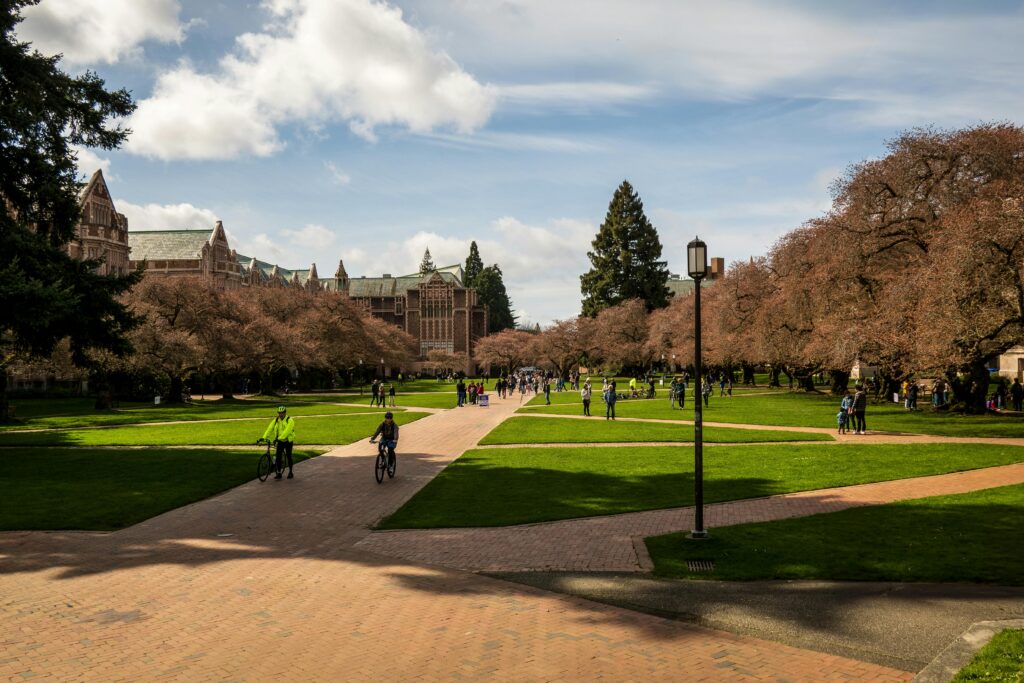
In addition to size, campus layout can also influence how a school feels. Campuses with sprawling lawns, quads, and common areas will provide ample opportunities to see other students without feeling crowded.
Cozy study areas and common rooms can make even the largest university in the US feel more personal. Most large public universities contain many or all of these elements somewhere; it’s the arrangement of these pieces that makes the atmosphere.
Campus tours at large public colleges can be a great way to gain a better understanding of how a campus feels. If possible, try to physically visit schools on your list before applying. You might find that exploring campus gives a completely different impression than clicking around a map on your computer.
What counts as a “large” college?
In general, 15,000 students is the threshold for big colleges, with 40,000+ being considered very large. For context, mid-sized schools are those with 5,000–15,000 students, and small schools have fewer than 5,000.
These aren’t strict cutoffs, especially considering that the number of students on campus can fluctuate each semester. Going abroad, taking a leave of absence, or even taking an off-campus course can diminish a student’s presence on campus. Inflows or outflows of students that would be readily apparent at small schools may be virtually invisible at large public universities.
Earlier, we discussed the importance of knowing who’s included in student enrollment figures. The same goes for knowing just how large a college is. A school with lots of online students may feel smaller than statistics lead you to believe. A real-life example is Liberty University, which has an official enrollment of over 140,000 students. However, only about 16,000 students take classes on campus. Based on our earlier scale of school size, Liberty is still relatively large, though 16,000 pales in comparison to the total enrollment.
Again, college enrollment isn’t the only factor in the atmosphere of the largest colleges in the US. Climate, rural or urban setting, and student demographics can all influence how a campus feels. Even colleges in the same size category — or with similar student populations — can differ significantly. The number of on-campus students, campus layout, and amenities all contribute to the overall impression of a school.
Why College Size Matters
While it may seem that the size of colleges has little bearing on your day-to-day life, it’s often a massive influence. Small and large public colleges can offer you a more guided or more self-directed experience. They may also offer you more or less both in and out of the classroom. Remember that these differences aren’t good or bad; every student’s needs and fit are different. What sounds like a drag to you might be someone else’s dream school.
College enrollment and size informs expectations around support, visibility, and independence. More than small colleges, big colleges may require students to be quite proactive in getting support and following up on requests.
The fundamental principle is this: more students require more resources, but get less individual attention. While there are always exceptions, this concept underpins many factors that differ between small and large public colleges. The largest colleges in the US may have numerous resources for students, from clubs and professional organizations to internships. At the same time, professors and supervisors may be working with more students, limiting the time they have for one-on-one discussions.
In contrast, smaller institutions may have fewer resources, but students are given more personalized support. In a small, tight-knit community, people may be more willing to extend informal support like personal introductions for various opportunities. Additionally, it might feel easier to participate in or even start student groups that pique your interest. Once again, there are always exceptions to this, like small colleges with large endowments or generous donors.
At the end of the day, college size is a key factor in college fit and shouldn’t be overlooked. Before applying, think deeply about what kind of learner you are and if large public colleges meet your needs.
Admissions at Large Public Universities

Let’s get one big question out of the way: getting into large public universities isn’t necessarily easier than anywhere else. True, they do admit thousands of students each year. In fact, large public colleges have enrollment goals directly tied to state funding. However, the largest colleges in the US are by no means universally easy to get into.
In-state students typically have priority in the admissions process at large public colleges.
Residency plays a large role in both admissions standards and acceptance rates. Universities often reserve a number of seats in each incoming class for in-state residents. Of course, it’s not impossible to get in as an out-of-state student, but be aware of your status. If you moved to a state recently, you may not qualify for in-state status for several months. Thoroughly research the residency requirements for large public colleges on your list.
Moreover, large public colleges aren’t necessarily easy to get into just because of their large enrollment.
Let’s compare UCLA — one of the best public universities and one of the so-called “Public Ivies” — and the University of Houston. They have similar enrollment figures of almost 50,000 students. However, their acceptance rates are very different, clocking in at about 9% and 74%, respectively. As we can see, enrollment at large public colleges doesn’t correlate with rate of acceptance. At the same time, plenty of great universities have high admit rates.
To take that a bit further, admit rates can also vary within an institution.
Published figures can obscure lower admit rates for specific programs or departments. High-demand majors like engineering or computer science might admit fewer students relative to applicants. Honors programs and offerings like them may also be more selective at large public colleges. At prestigious institutions like Public Ivies, this means admissions can be even more challenging.
What is the biggest college in the US?
As mentioned above, the largest colleges in the US may vary based on how college enrollment is counted. Some universities have more undergraduate students than others, even if their overall enrollment is lower. With that said, let’s look at some of the largest colleges in the US by a few different metrics.
Southern New Hampshire University tops the list of largest colleges in the US by total reported enrollment. They serve approximately 203,000 students across associate’s, bachelor’s, master’s, and certificate programs. The catch is that only about 3,000 of those students attend classes on campus. According to our previously determined scale, SNHU is classified as a small school by on-campus enrollment. If you’re seeking a small school experience, it might actually be a better option than most other schools in this article.
If we look at the biggest colleges in the US by on-campus enrollment, the top spot goes to Texas A&M University, which has over 81,000 students across its four physical campuses. While it may sound like students are equally distributed, the main College Station campus alone has nearly 75,000 students. Additionally, this campus is 5,200 acres, in comparison to Southern New Hampshire University’s 300 acres. It’s the poster child for large public colleges.
As we can see, the biggest colleges in the US vary based on the figures you’re looking at. While SNHU is the largest university in the US by sheer enrollment numbers, its campus life is relatively quiet. On the other hand, Texas A&M is clearly the largest university in the US in terms of students on campus. But where do they stack up on the global stage? Is either of them the biggest school in the world?
What is the biggest college in the world?
The biggest school in the world by total student enrollment isn’t even in the US — it’s in India. Indira Gandhi National Open University (IGNOU) reports over 3 million students on its books — a far cry from SNHU and Texas A&M. How is it so much bigger than other large public colleges we’ve seen so far?
As the biggest school in the world, IGNOU needs to leverage a different model to serve its learners. IGNOU is not a mostly in-person university like Texas A&M. In fact, it’s so large precisely because it prioritizes flexible, remote learning options. IGNOU operates as a national open university serving students across India through distance learning programs. As a result, its college enrollment spans domestic and international students, spanning the entirety of India and dozens of countries. Students can learn entirely online or through classes at one of hundreds of local centers.
Again, part of the reason IGNOU can support so many students in so many places is its unique structure. It is a nationwide educational system rather than one centralized institution like many large public universities in the US. It may not serve students like a traditional research university or liberal arts college, but its millions of enrollees attest to its efficacy. IGNOU is another example that demonstrates that the largest universities may not feel so large. You may have millions of classmates you’ll never see.
Why the “Biggest College” Depends on the Metric
So far, we’ve set the foundation for discussing the largest colleges in the US. There are crucial differences between total enrollment, undergraduate enrollment, and on-campus enrollment. These figures provide different levels of context for a large public college’s campus experience. Big colleges may have high total enrollment but relatively few undergraduates on campus, making for a quiet day-to-day.
Differences in metrics might come up in your research. Headlines can be misleading with their statistics. Stories about the biggest schools in California or the biggest research university might cherrypick numbers to suit their narrative. The same goes for other metrics such as post-graduation outcomes. When researching colleges, don’t rely solely on news sites; go straight to the source. The best public universities post detailed information about enrollment and more for prospective students to get the full picture.
Why are we reiterating this now? Well, next up is our list of the largest colleges in the US, and you should know our methodology. For each of these large public colleges, we’re using the total undergraduate and graduate enrollment from their 2024–2025 Common Data Set. The lone exception is Rutgers, which uses figures from their 2023–2024 CDS. Additionally, some of these large public colleges have multiple campuses, like Texas A&M. For these, we report total enrollment only for their main campus.
Ready to learn about the largest colleges in the US? Let’s take a look at our list.
20 of the Largest Colleges in the US
Here’s a list of 20 of the largest colleges, including some of the best public universities, in the US. This list was compiled using enrollment statistics sourced from each school’s Common Data Set (CDS). Most large public colleges make their CDS available online, so you can refer to it if you’re looking for more details.
20 Large Colleges in US
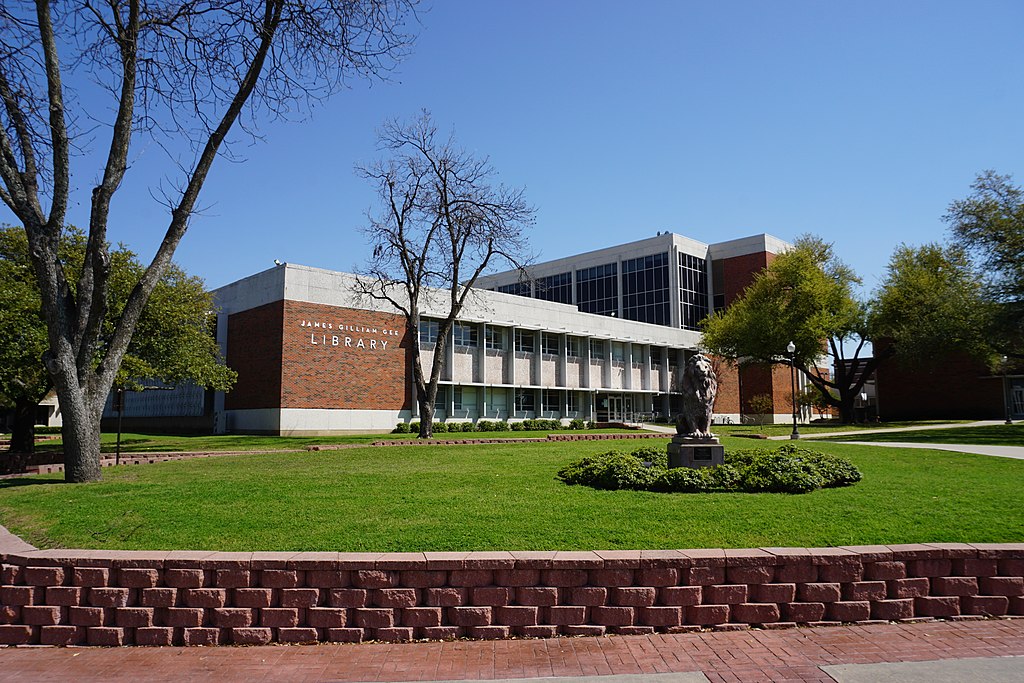
1. Texas A&M, College Station: 78,321
Located in a vibrant college town aptly named College Station in the heart of Texas, Texas A&M isn’t one of the regular big colleges — it’s the largest university in the US. It boasts top-ranked engineering and business programs, and a legendary national network for any “Aggie.” Though it’s not the biggest school in the world, if you’re looking for a school with student enrollment the size of a small city, the largest university in the US is the place for you.
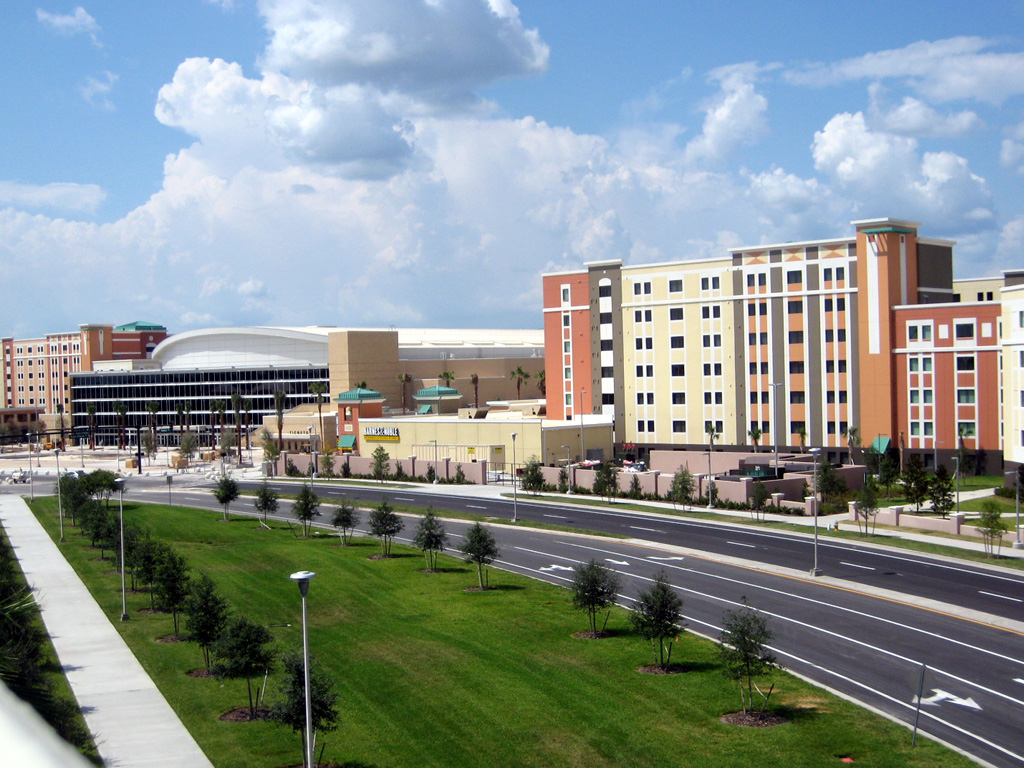
2. University of Central Florida: 68,819
Next on our list of the largest colleges in the US is the University of Central Florida, which is located just outside Orlando. It’s one of the largest colleges in the US, and has great programs in engineering, hospitality, and computer science.
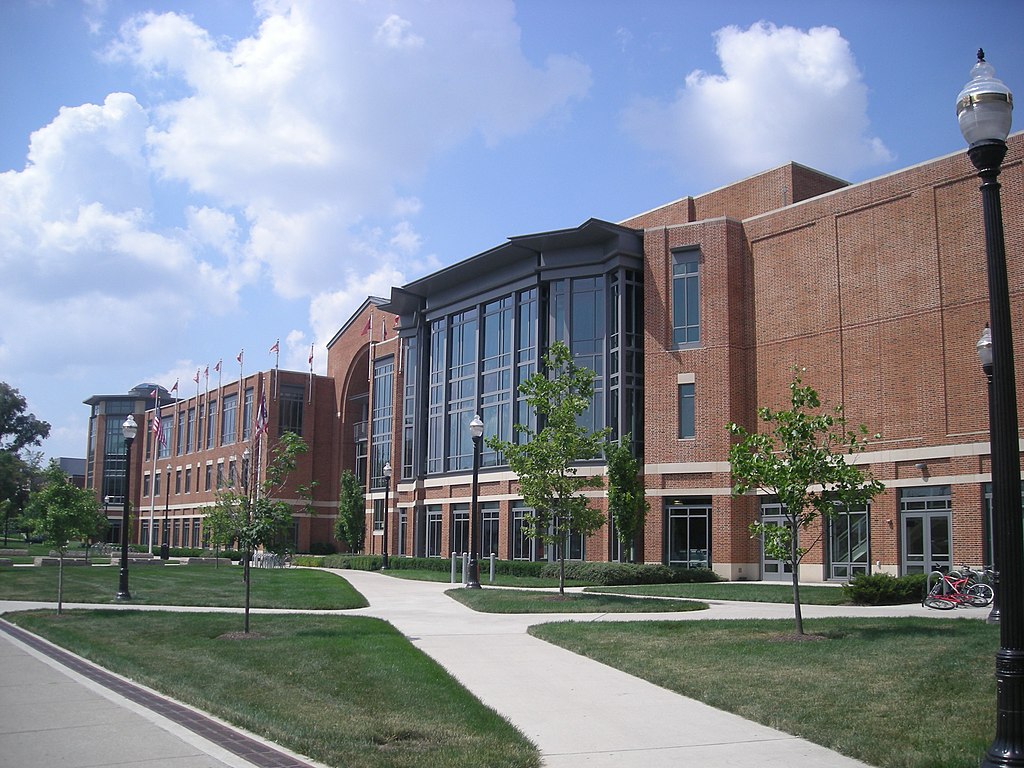
3. The Ohio State University, Columbus: 61,443
Located in Ohio’s capital, next on our list of large public colleges is Ohio State University. Ohio State is a Big 10 school, so if you’re just as excited about football as you are academics, large public colleges like Ohio State have you covered.
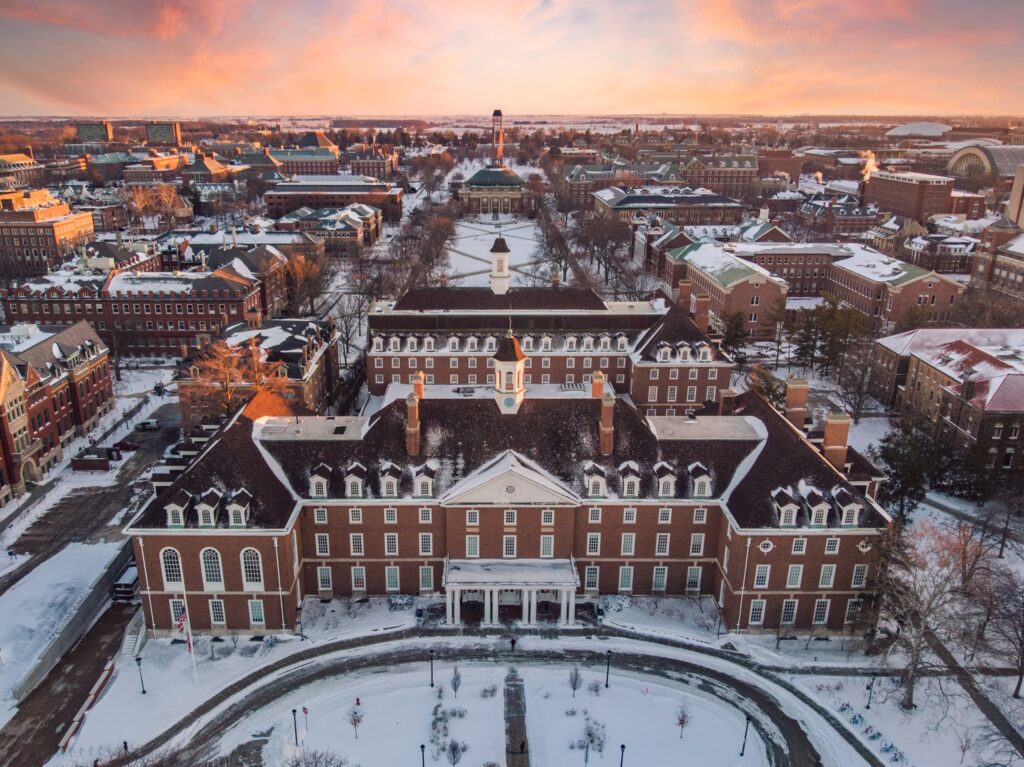
4. University of Illinois, Urbana-Champaign: 59,238
This Illinois school consistently ranks among the best large public colleges for engineering and computer science. One of the largest colleges in the US, UIUC offers world-class research facilities in a classic college town.
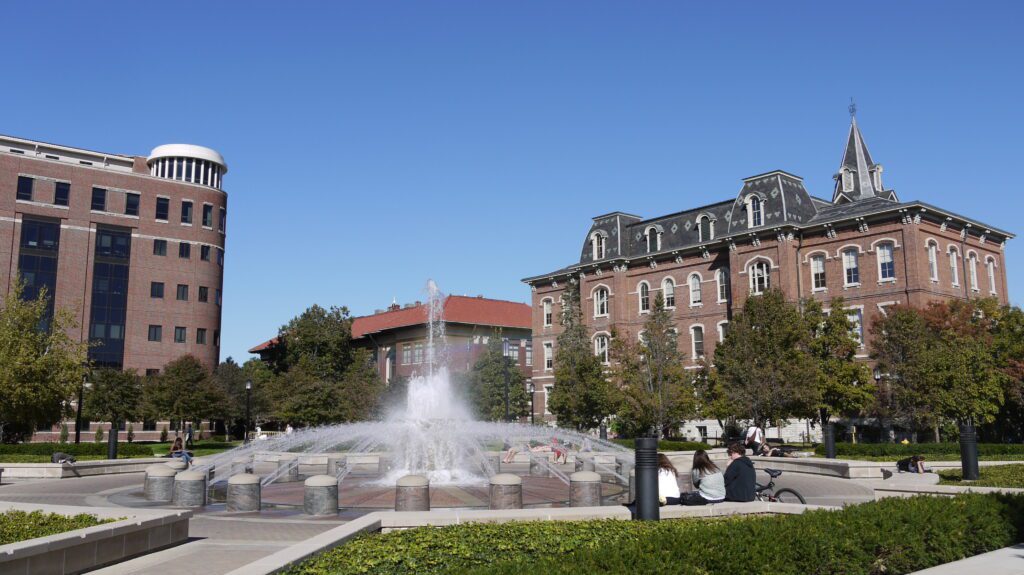
5. Purdue University, West Lafayette: 58,658
Ever heard of the “Cradle of Astronauts?” Purdue isn’t only one of the best large public colleges in the US, it’s also a leader in STEM education, with prestigious engineering programs.
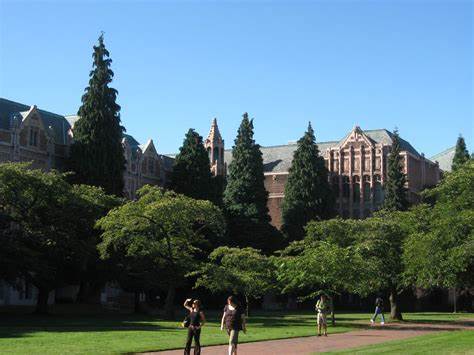
6. University of Washington, Seattle: 57,067
If you want to go into tech, UW could be the best of our large public colleges for you. It’s got top-tier programs in medicine, computer science, and environmental science — plus, you’ll be next door to major employers like Amazon and Microsoft.
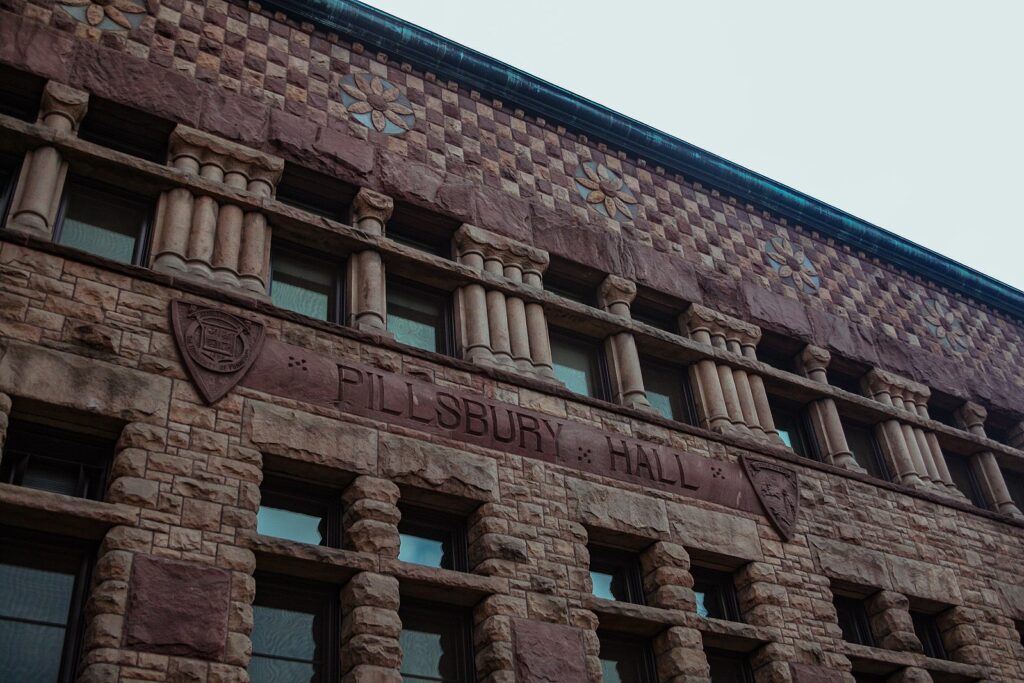
7. University of Minnesota, Twin Cities: 56,666
Next on our list of large public colleges is the University of Minnesota, Twin Cities, which is spread across Minneapolis and St. Paul. Whether you’re an athlete or just looking for a good tailgate, this Big 10 school is one of the largest colleges in the US and offers a great mix of academics and school spirit. Plus, UM’s acceptance rate is generous, at 75%.
8. University of Florida, Main Campus: 56,311
In addition to being one of the largest colleges in the US, the University of Florida is often ranked one of the top five public universities nationally. At UF, you’ll get the bustle and opportunities of large public colleges combined with year-round sunshine.

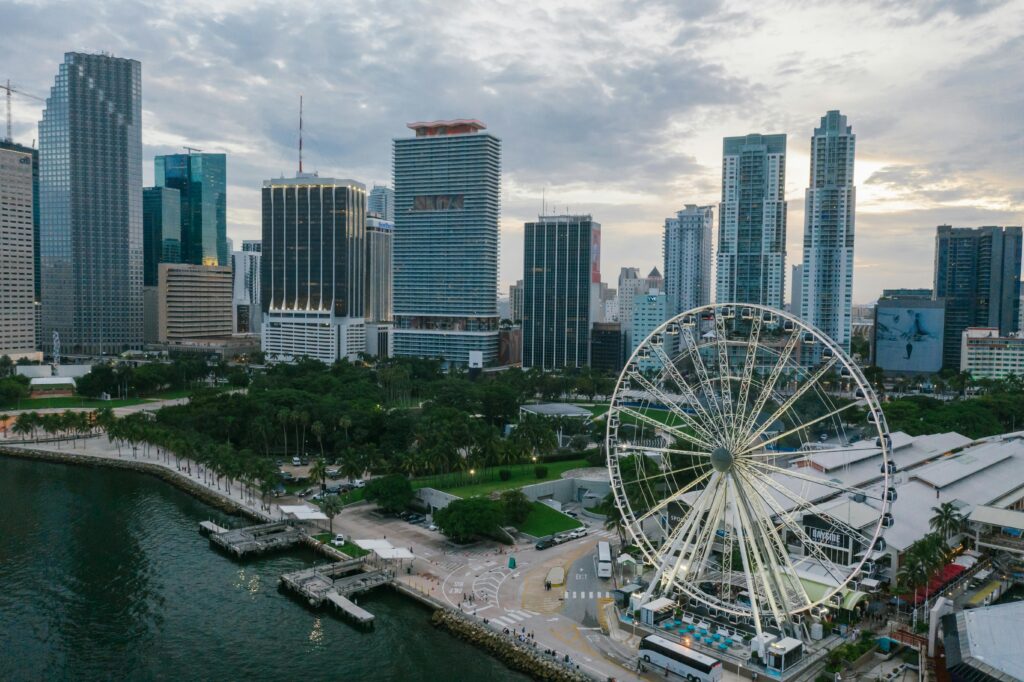
9. Florida International University: 54,817
Another Florida school, Florida International University is located in Miami. If you’re looking for large public colleges in the US that can set you up for a career in international business, especially in Latin America, Florida International might be the school for you. Miami is a vibrant, diverse city to live and learn in — plus, the weather’s great.
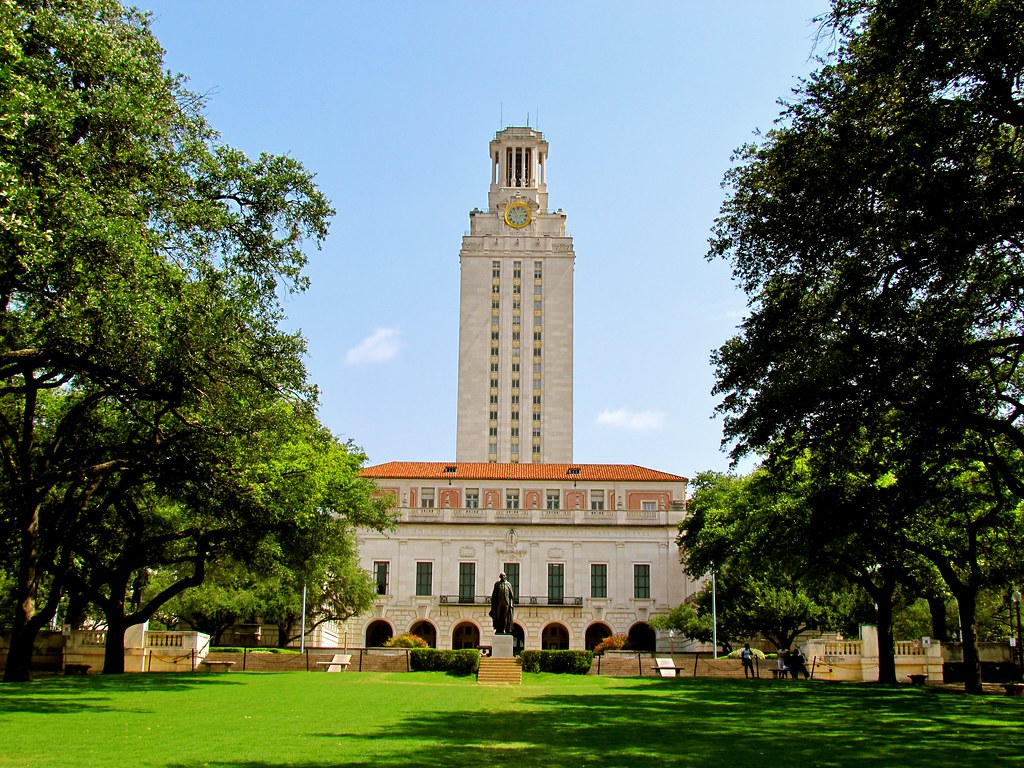
10. UT Austin: 53,864
Austin is rapidly developing and becoming a new tech hotspot — you could be part of that movement at UT Austin, the next school on our list of large public colleges. UT Austin has nationally ranked programs in both STEM and business fields.
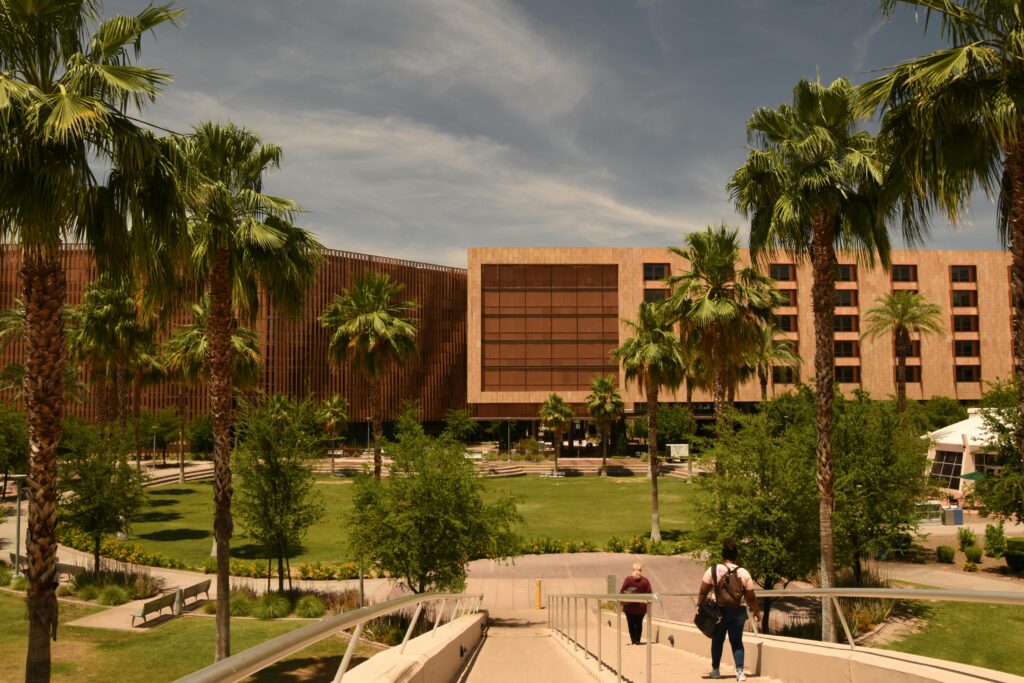
11. Arizona State University, Tempe: 53,286
Ranked the #1 university for innovation by U.S. News, ASU’s inclusive acceptance practices paired with rigorous research make it one of the most interesting schools on our list of large public colleges.
12. UW Madison: 52,097
Next on our list of excellent large public colleges is UW Madison, located on the shores of lovely Lake Mendota. It’s got rigorous academics, with programs in agriculture, engineering, and life sciences — and it’s another Big 10 school.
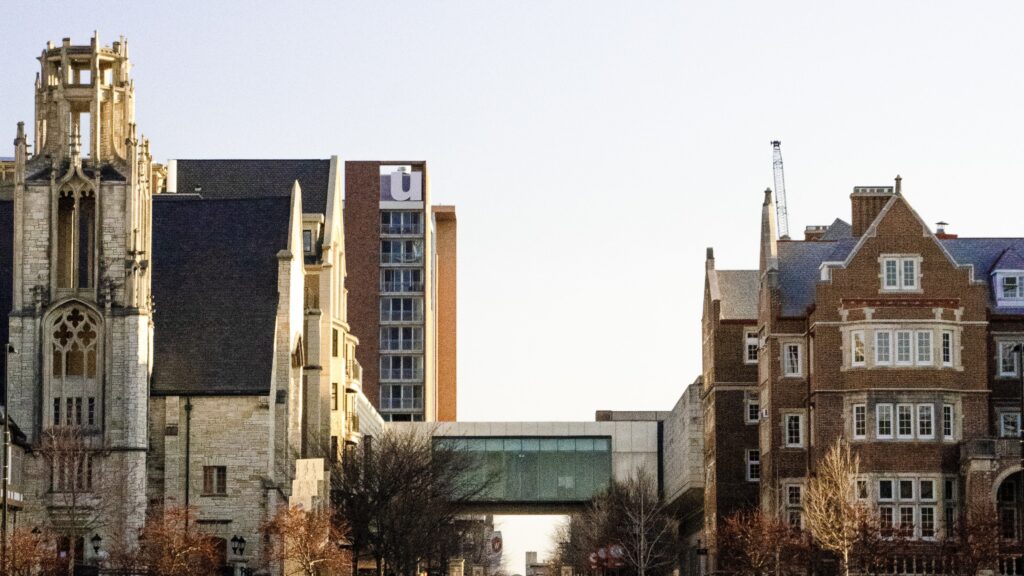
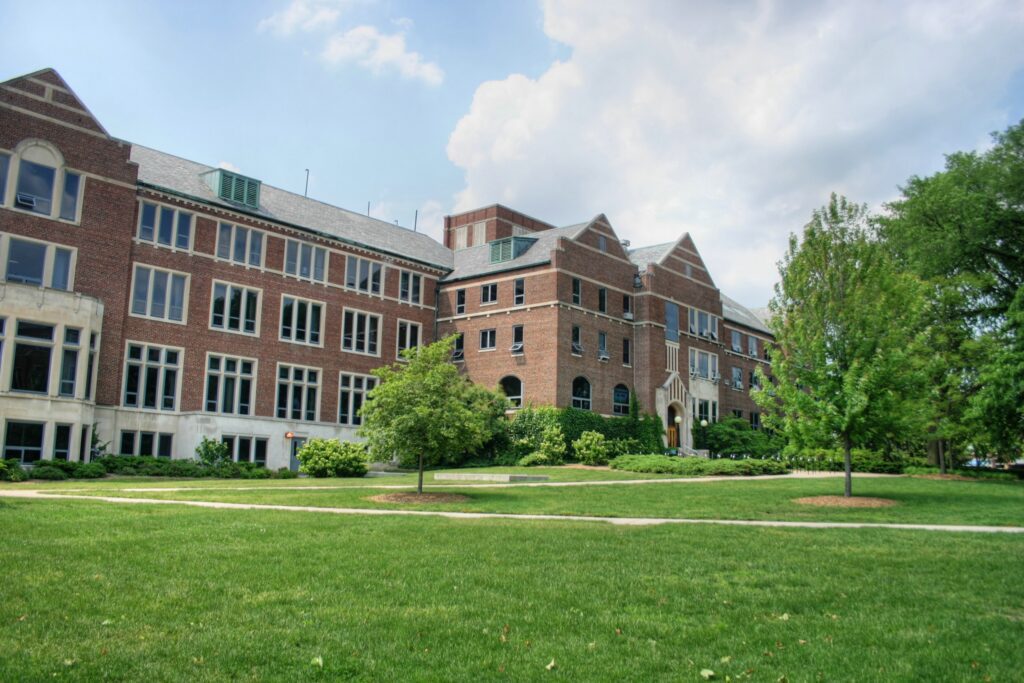
13. Michigan State University: 52,089
Sensing a pattern? Michigan State is another of the best large public colleges that also happens to be a Big 10 school, so you can go to games between study sessions. Thanks to its size, Michigan State offers majors in more niche fields like veterinary medicine and agriculture.
14. Rutgers University, New Brunswick: 50,617
One of the oldest of the large public colleges on this list, Rutgers in New Jersey was founded in 1766. It’s one of the largest colleges in the US, and is the only one on our list of large public colleges that gives students easy access to New York City.
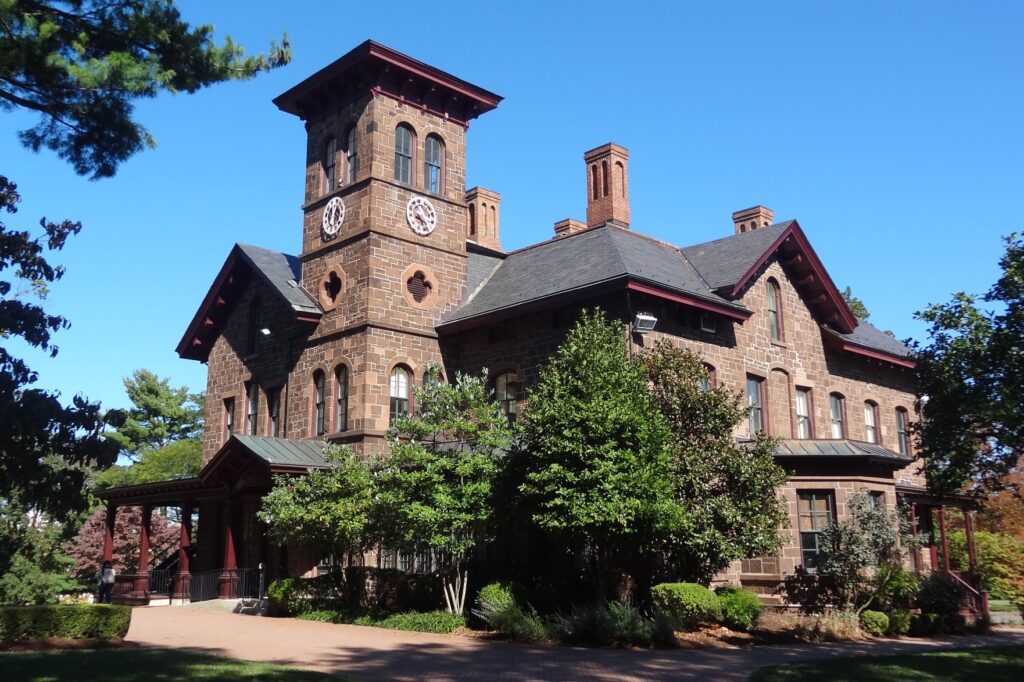
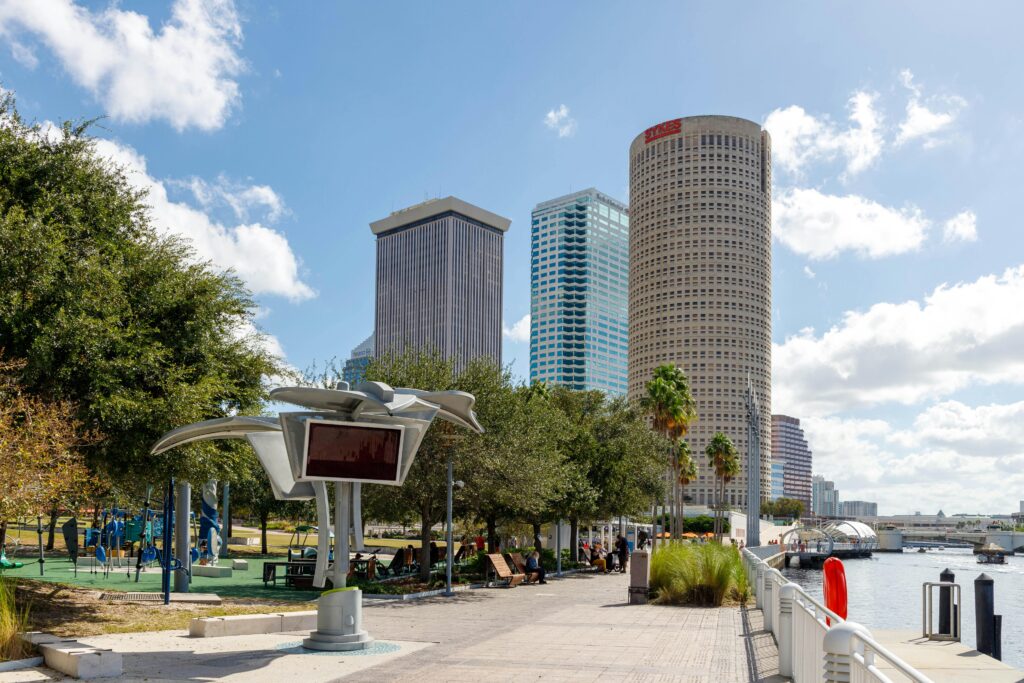
15. University of South Florida: 49,622
If Miami and Orlando don’t do it for you, consider Tampa, home to the University of South Florida. One of the top 20 large public colleges, USF is a great place to study medicine or business.
16. Penn State, University Park: 49,471
If you graduate from Penn State, you’ll be part of the world’s largest alumni network — one of the benefits of attending one of these stellar large public colleges. It’s also a Big 10 school, and students love the college town vibe of State College, Pennsylvania.

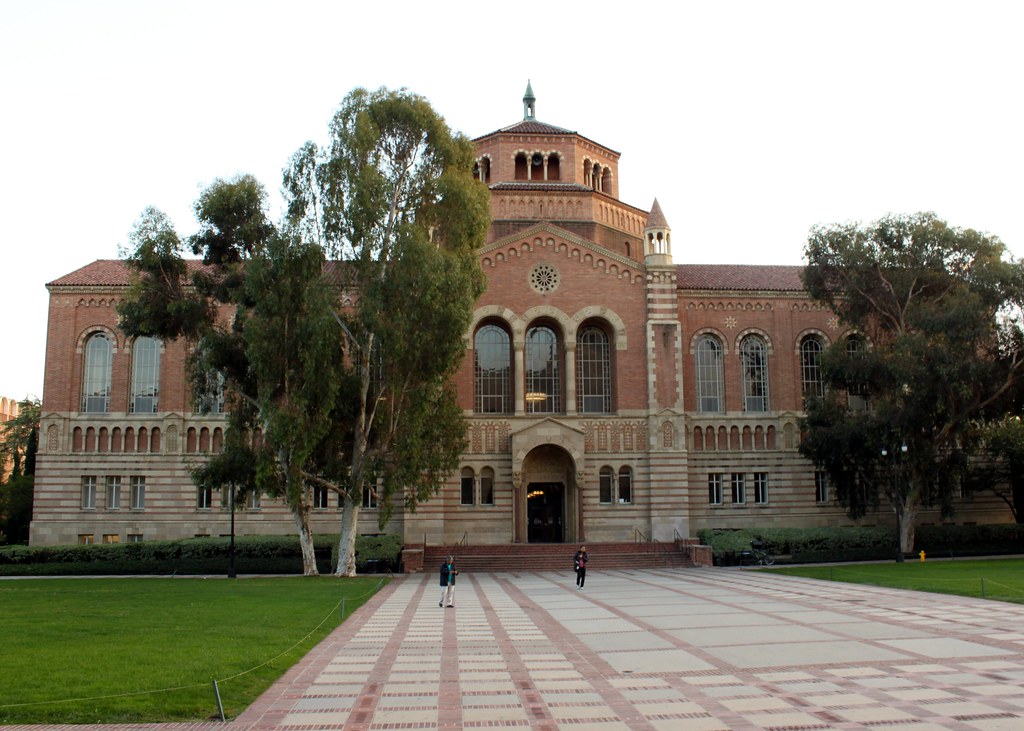
17. UCLA: 48,656
Located in sunny Los Angeles, UCLA is next on our list of competitive large public colleges. UCLA has a renowned film program (unsurprisingly, given its Hollywood location), but also has top-tier programs in engineering and medicine.
18. Indiana University, Bloomington: 48,626
Another Big 10 school, Indiana University is one of the largest colleges in the US. If you’re looking for a specialized business or music education, Indiana may be the school for you.
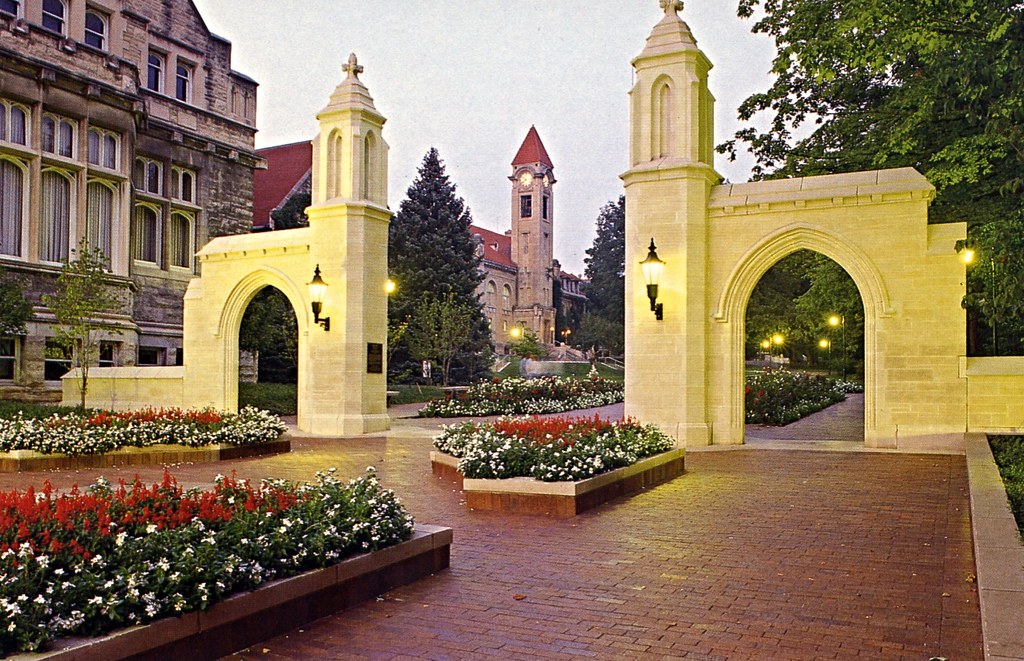
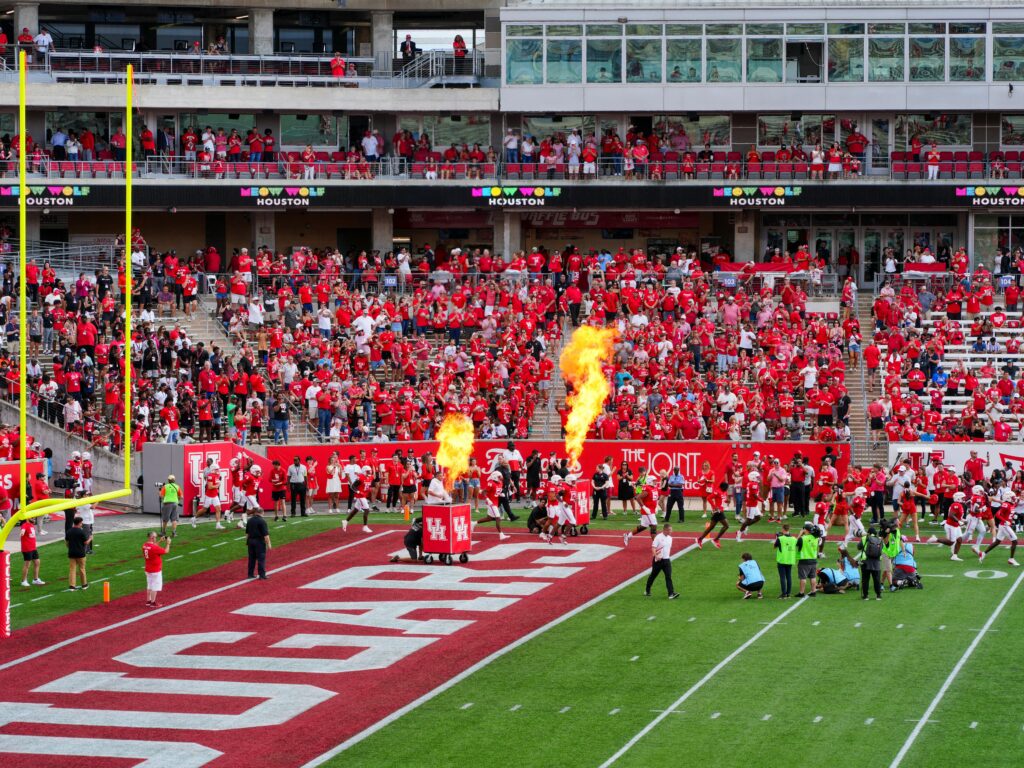
19. University of Houston: 47,980
This next school on our list of large public colleges is located in America’s fourth-largest city, Houston, TX. If you want to study business, aerospace engineering (a la Houston, we have a problem), or sustainability, UH’s proximity to Texas’s huge industries like oil and gas will be a plus.
20. University of North Texas: 46,864
Last on our list of large public colleges, the University of North Texas is located near Dallas-Fort Worth, and is one of the largest colleges in the US. Large public colleges like UNT offer an affordable education for in-state students.

(Psst: If you care less about size and just want to attend a stellar public university — many of which are on this list — or one of the so-called public ivies, check out our guide to the top public schools.)
What’s it like attending large public colleges?
Imagine if your college was also your whole town. That’s what it feels like to attend some of these large public colleges: the quads are the size of several city blocks, and you’ll pass by thousands of students a day as you walk to class. Because the college enrollment is so high, the sheer physical scale of these big colleges can be huge. Each of these large public colleges will have multiple dining halls, a number of multi-floor libraries, and a plethora of academic buildings in each department. You might even go to a lecture with 500 other students in the same room.
However, just because you’re attending one of the biggest colleges in the US doesn’t mean that signing up for classes will be any more complicated. Like other schools, the largest colleges in the US have centralized administrative systems. You can register for classes using the online student portal — though, for popular classes, there may be stiff competition.
At big colleges, you’ll have an academic advisor to help guide you as you work toward your degree. You’ll also have access to career centers, counseling, tutoring, and health services — all well-staffed and used to the pressures of dealing with high college enrollment.
Finding your place at a big college
If you’re planning on attending a large public college, know that you may have to work a bit harder to chart your own path. For example, in one of those giant lectures, your professor won’t know your name unless you go to office hours or raise your hand. You’ll have to join clubs, go to events and study groups, and work to introduce yourself to your classmates. Luckily, these schools have a ton of extracurriculars for you to pursue — the hard part may be deciding which ones to prioritize!
Someone’s experience at a large college can completely depend on their major, their housing, and what year they are in school. This is true about any college experience, but because big schools require you to be more proactive with your academic planning and social life, the gap between the experience you want to have and the one you’re having can be wider. Housing differences — especially whether you’re commuting — also will have a big impact on your experience, but it’s a trade-off a lot of students make in order to save money.
Next, let’s talk about the reason you’re actually at college: academics.
Academics at Large Public Colleges
At large colleges, introductory courses are often taught in large lecture formats, especially if you’re taking a class in STEM, business, or economics. For example, you could be taking a computer science lecture with 400 of your peers. These are popular courses that many students take before finding a more narrow path within their major. So, professors have to accommodate thousands of students looking to learn the basics.
But, for every giant class, you’ll have a slightly more normal-sized “section.” This is a mandatory discussion group that meets once or twice a week, usually led by a teaching assistant, where you can go over parts of the homework or curriculum. Sections, along with labs and recitations, provide opportunities to ask questions and get more individualized instruction.
The good news? As you get further on in your studies, the class sizes should shrink significantly. Once you get into major-specific courses, you may have classes as small as 20 or 30 people. These smaller classes can help you make connections with professors and lecturers in your department, which can lead to letters of recommendation for future jobs or graduate programs. It’s also a more manageable way to meet other students with similar interests.
Large public colleges also often come with one benefit that smaller schools just can’t match: resources. The largest colleges in the US have extensive research opportunities and specialized facilities. Especially in STEM fields, a research university will have world-class labs, research hospitals, or even land to study innovations in agriculture. These schools also offer far more courses due to their high college enrollment, which means that there’s a naturally larger pool of options. If you want to study a niche language, or a specialized branch of economics, the largest universities might be your best options.
Campus Life at Large Public Colleges
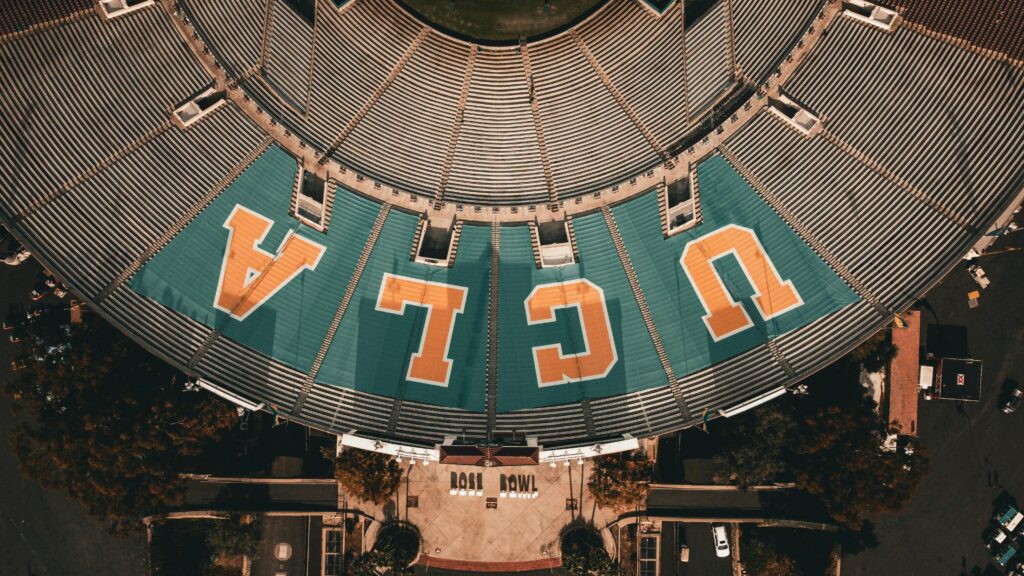
For most students, campus life at big colleges is a huge draw because there are so many opportunities to take advantage of. At the largest university in the US, you’ll find over a thousand registered student organizations. From investment clubs, cultural organizations, volunteer opportunities, outdoor activities, or even Quidditch (it’s still kicking), there’s something for everyone at the biggest colleges in the US.
Greek life
Many big schools also have significant Greek life, and you can choose whether to join a fraternity or sorority. If you’re interested in Greek life — or uninterested in it — make sure you ask current students, check message boards or social media, and do your research before you decide on which of the big colleges you wish to attend. Greek life can often be the dominant social scene at a school, and you’ll want to know that ahead of time.
Athletics
Another huge thing at big colleges? Athletics and school spirit. Many of these big colleges are in major athletic conferences like the Big 10, SEC, Big 12, and Pac-12. Most students go to football games every weekend during the season, and lots of social events like tailgates and parties are structured around sports. There are also marching bands, decades-old traditions, and general school spirit — so even if you’re not a die-hard sports fan, you’ll be swept away by the community vibe.
Housing
When the big Saturday game is over, you’ll make your way back to your dorm — but where will you live? Usually, big colleges have massive residence halls, mostly for first or second year students. Residential areas can feel like their own neighborhoods, with study spaces and dining halls built up around dorms. Upperclassmen often transition to apartments off-campus or live in Greek housing with their sorority or fraternity.
Many students at big colleges also choose a third option: commuting. Since these are public colleges, many students get tuition benefits for living in-state, and may already be close to their college. For students who choose to live at home, or somewhere significantly far off-campus, commuting means saving money to put toward other college expenses and long-term goals.
Community
One great thing about the biggest colleges in the US is that some of them are incredibly diverse — they have to be, just by nature of their size. Whatever you do and whoever you are, you will be able to find someone who shares your interests or identity. This is how most students create community at the biggest colleges in the US. Even if in high school you were the only person into slam poetry, or if you’re worried about leaving your religious community back home, there will undoubtedly be a place for you to belong at college.
How to Decide if a Large Public College is Right for You
So, does enrolling at the largest university in the US sound like a dream — or are you on the fence? If you’re still not sure about going to one of the biggest colleges in the US, here are some tips you can think about.
5 Tips to Decide: Is a big school for you?

1. Visit a large campus and notice how the size feels in person.
The size of colleges is a really big factor for many incoming students, and there’s no better way to test whether you’ll like it than to visit. You may have always dreamed of going to the biggest school in the world (or just the largest university in the US), but when you get there the sheer distance between your dorm and your potential 9 a.m. section might be too much.
2. Consider how much choice you want in majors, classes, and activities.
The largest universities, by nature, are going to have the most options — for everything. If you’re comfortable with a student enrollment in the tens of thousands, you’ll be able to take advantage of greater resources than somewhere with a college enrollment of only a few thousand.
3. Think about your comfort level in large classes and busy spaces.
If you always fall asleep during lectures, or you get overstimulated in crowds, a big public college might not be the right place for you.
4. Reflect on how you prefer to get help and support.
Are you comfortable seeking out support, whether it’s for your mental health or for your class schedule? Students have to do this at all schools, regardless of the size of the college enrollment, but large schools require even more self-sufficiency. If you want to get to know your professors, you’ll have to take extra time out of your day to go to their office hours and meet one-on-one. If you think that responsibility is a bit too much, consider going to a school where you’ll get to know the faculty more easily through regular classes.
5. Weigh the pros and cons of a high-energy campus environment.
There’s no right way to be a college student, regardless of the size of the college enrollment. But if you aren’t energized by the constant buzz, packed weekends, and large-scale social scene common at many big schools, a small liberal arts college might be more your vibe. However, if you want a school with a huge national network and contagious school spirit, a large public college could be a better cultural fit.
Large Public Colleges – Takeaways
Even if you’re not going to the biggest school in the world, college enrollment and the size of colleges in general will hugely impact your college experience. Of course, there are pros and cons to attending a large public college, but you can’t deny that it’s a college experience unlike any other.
If you’ve gotten this far and you’re still interested in going to a big school for college, here are some things to remember:
3 Key Takeaways

When someone talks about “large” colleges, they’re usually talking about college enrollment — and even that’s not a perfect measure of how many students are on campus at any given time.
There are different ways to measure how big a school is. For example, the biggest school in the world has over 3 million students — but they’re not all together on one campus. If a school has a small campus, it can feel busier, even if the student enrollment isn’t that huge, and vice versa.
Large colleges have a lot of advantages. The best public universities, like the public ivies, offer a multitude of academic resources — and if you’re an in-state student, you could end up attending an incredible research university, with a decently high acceptance rate, for a low cost. But even the best public schools, if they’ve got college enrollment in the tens of thousands, will require you to chart your own path.
The most important thing to remember when considering applying to large public colleges is that your experience will be what you make it: If you put effort into finding your community and pursuing what you love — and you’re excited by the prospect of going to a college stuffed to the brim with school spirit — a big college could be a great fit.
But if you’re still mulling it over, CollegeAdvisor has got your back, with personalized advising, essay editing, interview prep, and more free guides like this one.

This article was written by Gina Goosby and Rachel Kahn. Looking for more admissions support? Click here to schedule a free meeting with one of our Admissions Specialists. During your meeting, our team will discuss your profile and help you find targeted ways to increase your admissions odds at top schools. We’ll also answer any questions and discuss how CollegeAdvisor.com can support you in the college application process.