
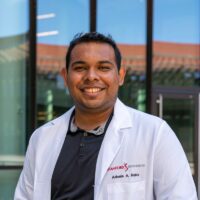
Adonis Rubio
Stanford University
Applying to college as a STEM student takes more than strong grades and test scores. Selective colleges are looking for students who demonstrate curiosity, initiative, and a clear connection between their interests and their impact.
In this session, former Stanford and Harvard admissions officer Dr. Pamela Ng and Stanford Immunology PhD student Adonis Rubio break down how top colleges evaluate STEM applicants from academic preparation and extracurriculars to research experience and personal narrative.
You’ll gain a behind-the-scenes look at what stands out in highly selective admissions, along with practical guidance on how to build and present a compelling STEM profile. Drawing on experience from both the admissions committee and the research lab, our speakers will help you better understand what it actually takes to be a competitive applicant.
2026-05-20-Standing Out in STEM – What It Takes to Get Into Top Colleges
Anesha: [00:00:00] Hi, everyone. Welcome to tonight’s webinar. My name is Anesha Grant. I’m a senior advisor here at CollegeAdvisor, and I will be your moderator for today. Today’s webinar is focusing on, “Standing out in STEM: What Does it Take to get into Top Colleges?” Before we get started, just to orient everyone with the webinar timing, we will start with a brief presentation from our presenters and then answer your questions in a live Q&A.
Anesha: On the sidebar, you can download our slides under the handout tab, and you can start submitting your questions whenever you’re ready in the Q&A tab. But first, let’s meet our presenters, Dr. Pamela Ng and Adonis Rubio. Hi, Pamela. Can you get us started with just a little bit about yourself? Hi,
Pam: everyone.
Pam: Thank you so much for joining us. My name is Pam. I went to Harvard as an undergrad. I actually studied East Asian studies. We’ll get into how that worked out for me later on. Um, and then I studied, um… I got my PhD in neuroscience and psychiatry, um, at Stanford. I also did my postdoc in S- at Stanford in [00:01:00] neuroscience.
Pam: I was a clinical faculty member in neuroscience and psychiatry. Um, and now I am working with CollegeAdvisor.
Anesha: Thanks, Pamela. Adonis? Hi,
Adonis: everyone. Um, yeah, it’s great to have you all here with us today. So I was born and raised in Southern California. I went to Stanford for my undergrad, where I did a bachelor’s in biology.
Adonis: Um, was really oriented in pre-med for a bit, but then really got excited by research and STEM. So then after I graduated, um, I started my PhD at Stanford in immunology. So I do a lot of infectious disease research, and I’m currently finishing up my PhD now, and I just committed to starting a postdoc position, so a research position in a new lab, um, looking more so at, uh, neuroimmunology and kind of protecting kind of your brain as you get older.
Adonis: Um, yeah, and then I’ve been working with CollegeAdvisor and, and really excited to talk to you all about our paths today. All
Anesha: right, we kind of have a, a Stanford full house. Uh, I’m also… I did not go to Stanford, I [00:02:00] went to Harvard, but I am a staff member at Stanford, so I currently work there. Um, so if there are Stanford-specific questions, I feel like we could probably tackle them in addition to, uh, talking about STEM today.
Anesha: But before we get the presentation started, gonna just do a quick poll. So welcome to those in the room. Go ahead and just let us know what grade you are in. If you or… if you are a parent or a teacher, we welcome you. You can go ahead and select other. Um, as we’re waiting, uh, for some results to come in, I’m…
Anesha: Neither of you, neither of you are, are MDs. So I’m curious what, and you might get into this a little bit in your presentation, but what was the difference or line for you all between PhD, MD, if that was, if MD was ever a consideration?
Pam: I could go first on that. I actually did go to med school. I dropped out of med school.
Pam: Told you. Sh- no one should follow my path. That’s the lesson for today. Um, so I, I actually always wanted to be a physician scientist. I wanted to run a lab and, um, do clinical work part-time, but I was… I did PhD first, [00:03:00] um, because for many reasons, I am foreign, um, you can probably tell from the accent. It was a lot easier to do the PhD first, and because of visa re- reasons.
Pam: I don’t know if there are international students on this call, but, um, I did actually try that path. I don’t know about Adonis.
Adonis: Yeah. Yeah, for me, um, yeah, I, I definitely heavily considered it. We, I think I’ll talk about it a little bit, um, later as well, but was always kind of encouraged to be a doctor. Um, my mom’s in nursing.
Adonis: Uh, I was told I was really nice, so I should be a doctor. Um, and I kind of went towards that path all the way up until preparing to take the MCAT exam, and then I realized before I, you know, paid for the exam, I was like, “I don’t think this is what I wanna do with my life.” Um, and, um, that’s kind of when I realized that I was in the lab most of my undergrad, and I think that meant that I really liked it.
Adonis: Um, so yeah, so I decided to do science research instead. Um, and yeah, we’ll talk about it, but there’s still definitely ways to impact, you know, the medical system and patient lives through [00:04:00] research. So yeah, happy to talk about that later.
Anesha: Yeah, no, and I know we’re gonna talk about STEM broadly, but I know you both are, like, health adjacent.
Anesha: And so, um, I just wanted to get that perspective. Okay, uh, we will go ahead and close our poll just for you all to know. We’re actually pretty evenly split, um, amongst the n- uh, three, uh, lower grades. So we have, um, 19% ninth graders, 19% 10th graders. Our biggest group are 11th graders, 11th graders with about 35%, and then we have 30% of parents or teachers.
Anesha: So pretty even of folks kind of exploring in the early part of high school. All right, I will stop talking, hand it over to Adonis, and I’ll be back a little bit later.
Adonis: Awesome. All right. Hello, everyone. So yeah, I’ll, I’ll go ahead and, and take a couple, uh, well, m- more than a couple minutes perhaps, but to talk a little bit about some of the questions here, and then of course in the Q&A I’m more than happy to elaborate on any of these.
Adonis: Um, so what was my college application process like? Um, and what did I choose, which college to attend? [00:05:00] So to be honest, I think a lot of people don’t really understand this when I say it today, but I really had no clue about private schools, the Ivy Leagues, you know, kind of really thinking about, you know, prestige of schools growing up.
Adonis: Um, so my family, um, both immigrated to the United States. Um, I have an older brother, older sister, but they went to, you know, Cal State Long Beach, kind of very local schools, um, from where I grew up. So when it came to navigating the application process, I was actually rather- Uh, on my own. And my family wasn’t able to help me c- that much.
Adonis: But thankfully, I actually had a lot of, um, amazing advocates and mentors throughout high school, such as my teachers. Um, so it was actually my high school AP biology teacher, who I really got close with, who encouraged me. You know, I told him that I was gonna be visiting, you know, University of California Berkeley, University of California San Diego, or, um, well, yes, I did visit San Diego, but also UC Davis.
Adonis: And he was like, “You know, while you’re up there, there’s a school up there, maybe take a swing by it,” and it happened to be [00:06:00] Stanford. Um, and when I came back, I told him, like, “I wanna apply to Stanford. It seems amazing.” Um, obviously, like, a really great school, but to me, it was really about what I thought the fit was there.
Adonis: I really kind of, as you might say, like, vibed with the school or the campus. Um, and so for me, it was really visiting the different campuses and kind of seeing, you know, what the different environment was like, what different, you know, how students liked it. And of course, you know, when I visited, it was, like, half a day, so I really got a snapshot into what it was like.
Adonis: Um, but I think being able to talk to people who go to these colleges or colleges that are similar can really help you get an understanding of what is it like at these schools, and importantly, would you like those schools, right? I think that’s a big question, and it was a big question for me in my application process, um, was would I actually want to attend here?
Adonis: You know, would I be content? Would I be happy? Um, and so I think for me, you know, um, I ended up applying to a, you know, a, a variety of [00:07:00] schools from kind of the Cal State, you know, University system in California, University of California system. Um, and then I applied to most of the Ivy Leagues, as well as Stanford.
Adonis: Um, I actually applied to Stanford early action, so, um, I, I did their kind of restrictive early action component, which allows you to apply early and find out early. Um, you’re not committing, you’re not committing to going there if you get in, but it’s a good kind of opportunity to, to see whether or not you get in early.
Adonis: Um, I actually did get in early, so that was exciting. Um, but I, for some reason, still applied to colleges even after I found out. Um, so I got into, you know, most of the Ivy Leagues, um, and, uh, a lot of the UCs, and ultimately chose Stanford because I just felt like, um, you know, we’ll talk about this more, I think, but the opportunities there seemed really amazing for the things I wanted to do, which was science.
Adonis: Um, and so I think that’s, that’s a big component for me. Um, kinda leaning into that, how did I know that STEM was the right fit for me? So as [00:08:00] I kinda mentioned, I always thought I was gonna be a medical doctor, um, so an, an MD, um, for those of you. Um, and my mom was into nursing, uh, or is a nurse, and, um, I had always be- been interested in medicine.
Adonis: When thinking about, you know, in AP biology or even AP chemistry, my interests were a lot more in kind of the medical-oriented applications of these things. Um, but more importantly, I think- I kind of jumped on the bandwagon of a lot of people who knew me were like, “You know, you’re very compassionate, like you’d be a great doctor.”
Adonis: And so I kind of, you know, science and compassion, I was like, “Great, I’ll go to medical school.” So I, I just ran with that. So when I applied to colleges, I was really interested in going to medicine. When I got to college, I was interested in majors that would allow me to do the pre-medical track. Um, but then in college, and even sometime in, in high school, it was really the, the idea of research that really kind of captivated me.
Adonis: So in high school I was able to do the AP Capstone Series, so that’s [00:09:00] AP Seminar and AP Research. I think for me, I was one of the… well, I’m getting old, but I was one of the first like kind of classes in the, in the US to do this. Um, and so they were still working out a lot of things. And for me, I was really interested in doing science related questions.
Adonis: And as a course, as a high school student, that was a bit harder than people who wanted to do more psychology or social study-based questions. Um, so accessing a lab for me was very difficult in high school, and I imagine for most students. So there was still an eagerness to want to do research. So when I got to college, um, I originally did research ’cause I was, you know, told med schools would really like that and to have that extra-curricular.
Adonis: But when I was actually in the research lab, I found myself really being excited by the things I was doing. Um, and so it was kind of that where I realized, I took a break from some of the pre-med, um, like volunteering, hospital shadowing, um, I kind of took a break from that for a little bit. And when I came back I was like, “That was, that was great,” you know, a nice little break.
Adonis: I came back. When I took a break from the research lab, I was missing [00:10:00] it like a weekend. So it kind of was a really big tell for me of like, oh, I really miss being in a lab and the bench more so than, you know, um, you know, being, you know, shadowing in the hospital and things like that. And again, that was a big tell for me as to maybe research is kind of more, or STEM is more what’s right for me.
Adonis: Um, what I think helped me stand out as a STEM applicant, so certainly in high school, um, you know, I went to a four-year public high school. Um, relatively big I might say. I think my graduating class was about 1,000 students. Um, so I actually don’t actually know where that ranks in terms of how big class sizes are nowadays, but, um, for, for us it was relatively big at our school.
Adonis: Um, and, you know, yeah, so I think the biggest thing for me was I had a strong foundation in the STEM coursework, so, you know, I did most of the AP courses that were offered at my school that allowed for science. So AP Biology, AP [00:11:00] Chemistry, AP Physics, um, you know, took those, took the exams. But I think another thing that really helped, um, and I do remember actually, so when you get in, at least for my year, when you get into Stanford you get to talk to your admissions officer, um, which was crazy.
Adonis: Um, and so they kind of get to tell you like, “Oh yeah, like I read your application and it was really cool to see this,” right? And so one of the things that they did mention was that- They really were like the, my initiative taking. So my school didn’t offer certain math classes, so I decided to take dual enrollment at a local community college.
Adonis: Um, and because of that, I was able to actually help our high school start, you know, higher level math coursework. So my admissions officer kind of told me, like, it was kind of that initiative that really stood out to them in terms of this person really wants to continue to challenge themselves in STEM coursework, and is, you know, trying to get things set up to do that, right?
Adonis: So I think for me, not only was it just having a strong foundation, but it was trying to really fill in the gaps of what I was missing because I was excited to, to do the [00:12:00] STEM work, right? So I think, um, you know, again, I think it’s a lot of just getting a sense for initiative, having a strong foundation, and then I, as I kinda mentioned here, right, you know, I, I really tried to make good connections with my STEM teachers in high school, and I think they were able to speak a lot to my interest in science, um, as I applied to school, um, through my, you know, letters of recommendation.
Adonis: So again, I think, um, that’s kind of what helped me stand out, I would say. And then I think this is the last slide, but, um, for me, you know, what advice do I have for students who are applying to STEM programs? Um, you know, definitely, you know, I think the, I, I think in these days, it’s, it’s, it, it may seem a lot, uh, so I advise a lot of students currently with CollegeAdvisor, and I think, um, I totally understand students’ anxiety in terms of I need to do X, Y, Z to get in, right?
Adonis: There’s kind of always this, uh, checklist perhaps that you need to do. Um, and what I would say really is, you know, [00:13:00] follow what you’re interested in during high school. That’s really the most imp- a- a- and really throughout your life, to be honest. Follow what you’re interested in. It’s, it’s gonna help you be content and happy.
Adonis: So in high school for me, the biggest thing was championing my diverse, or my curiosity, right? If I was interested in something or if I wanted to learn something, I figured out how can I pursue that, right? Even if it’s not exactly how I wanted to do it, right? So for my AP capstone course, I wasn’t able to be in a research lab to do an experimental question, but I adapted my research project to be more of a literature review, right, in terms of r- you know, medical treatments for HIV, for example, right?
Adonis: And so I kinda went out of my way to structure something to where I would still be able to get something out of it that I was interested in. And this is a great opportunity to do passion projects, for example, um, and we can talk about that in the Q&A if you, if you don’t have structured programs perhaps.
Adonis: And the other thing is, um, you know, STEM is an iterative process. There is not a clear line to, you know, to get from point A to point [00:14:00] B. There are many different pathways for how you can get to science and STEM, and you don’t need to have everything figured out right now, right? So what I would say is really try to pursue the things you’re interested in, and if you’re not interested in a club in high school, great.
Adonis: Move on to another one. Try something else that you might be interested in, right? Don’t feel like you need to be- Stuck into a club because it’ll look good, right? Really pursue the things that you’re interested in. Um, and it’s okay if when you apply to college, you totally change your mind when you get into college.
Adonis: That’s totally fine. That’s actually a great opportunity for you because you’re exploring different things. Um, so when you’re going through the application process, you don’t need to have, you know, 10 publications or all these kind of things. What you really is just showing the admissions committee that you’re interested in science, um, and that you’re passionate about it, right?
Adonis: Um, if that’s what you know already. So, um, again, I can talk about more of that in the Q&A. Um, but I think that’s kind of quickly what I would say about these different questions and my advice to you all. Um, and now I’m gonna pass it over, [00:15:00] um, to, to Pam to kind of give her insight as well.
Pam: Thank you so much, Adonis.
Pam: Um, so that was so smooth and so lovely. Mine is going to be a lesson in what not to do, so do not follow anything that I’m about to say. Um, so my college application process, I grew up in Australia. Um, so it’s a little bit different. Um, I only applied to the eight Ivy Leagues because those were the only schools I’d ever heard of.
Pam: At the time, Stanford was not really, um, I’d never even heard of it actually, and it wasn’t as famous as it is now, um, ’cause I’m very old, and it was a long time ago. Um, so the only colleges that I had access to and had any information about came from the US Consulate in Sydney, which is where I went to get, to go get my visa.
Pam: Um, and there were no LinkedIn. That didn’t exist at the time. Um, it was all paper-based everything, books. Um, and there weren’t even any books or tutoring resources or anything at the time in Sydney. Um, I was very unusual. [00:16:00] I went back to speak at my old high school, um, about how to apply to US universities, and it’s only now maybe becoming a little bit more popular.
Pam: But, um, back then, nobody did it. I was very weird. Everyone thought I was crazy, and my teachers kept asking, “Why are you going to America when you could stay here and go straight into medical school?” I did not want to go to medical school at 18. Um, but anyway, I was very lucky. I don’t know how it happened, but I did manage to get into all eight Ivy Leagues, and I really wanted to go to Brown.
Pam: We’re gonna talk about that a little bit more in the next slide. Um, but my mom gathered every American we knew in Sydney, which were two people, uh, who convinced me that I should go to Harvard, so that’s what I did. Um, I did not know that STEM was the right fit for me. Um, all the way up until my PhD, it was not something that I was thinking about.
Pam: I was thinking of going to business school. I was, um, the whole time grooming for a career in business. In college, every single summer, I did investment banking, management [00:17:00] consulting, um, internships because that’s what would land you a job when you graduated. So starting freshman year, I worked, um, every single summer in one of the industries.
Pam: Um, and I chose East Asian studies because I was taking the language. I was learning Mandarin. Um, and it- When you’re majoring in a language or, um, a culture, um, you have a ton of electives to work with after you’ve finished all your language requirements. Um, and I wanted, I always wanted to design my own plan of study, which is why Brown really appealed to me.
Pam: Like, from the get-go, I knew what I wanted to go explore. And, um, Harvard actually has a pretty strict core curriculum where you really have to plan your, um, courses out over the entire four years to get all of the… I don’t know, maybe Anesha would disagree with this, but, um, I had to plan it out to get all the requirements I needed to get in from the core.
Pam: Um, and so I felt like that was really strict, like it didn’t allow me a ton of room to have as many electives as I wanted. Um, anyway, so like I was saying, even after graduation, I [00:18:00] worked in management consulting first, and then I did investment banking and private equity, and then it was time for me to apply to business school, and I really didn’t want to.
Pam: Like, it really felt like it wasn’t the right fit. Um, and at the same time, I was taking, um, a lot of evening classes at Berkeley. Um, you can do that, and that’s one of the great things about the public, um, university system. And I started taking neuroscience and psychology classes, and I fell in love with it, and couldn’t stop thinking about it, and doing everything I could around it.
Pam: And my best friend was, um, a PhD in material science at Berkeley at the time, and he said to me, “You know, um, schools will pay you to go to graduate school.” And I was like, “What? Someone would pay me to do this for a living?” And I couldn’t believe it. So anyway, that’s what I did. I applied to graduate school with no neuroscience background, no courses in neuroscience, nothing at all.
Pam: Um, I took the GRE, and that was about it. And then, um, I managed to get in, and like I said, [00:19:00] don’t follow my path. It was not a good one. Um, and let me see. What helped me stand out as a STEM applicant? So in high school, I actually really, really loved bio. I should have used that as a signal, because I kinda dropped it in college.
Pam: Um, the college weeded classes weeded me out. I was not loving the whole 8:00 AM, um, coursework and long, long, long labs. Um, but I did the Bio Olympiad in high school. I really, really liked it. I was spending all of my spare time reading about bio anyway, and thinking about it, and asking lots of questions about it.
Pam: Um, and then I ended up doing the, really well in the competition. I made the, the team for my country, and then I medaled. Um, so I think that helped in getting in, um, to the Ivy Leagues So what advice do I have for students applying to stem, top STEM programs? I think I would agree with Adanas on this, like, I was really obsessive.
Pam: I was obsessive about the questions I had in STEM, um, especially bio. I think that you can let your curiosity drive, um, your, what you end up doing. [00:20:00] Like I said, I wasn’t doing the Bio Olympiad because it was a strategy, I did it because I loved it, and there was nothing else I wanted to do. Um, but I don’t think you need to have your entire life figured out by 16.
Pam: Um, I think you can sort of slowly make your way into it and try lots of different things. Um, but I would say that I definitely was guided by what I was interested in and what I found intriguing, and I always have been, and I just kept going after it. Um, so I would say that, you know, it’s okay to explore, um, and it’s okay to experiment if you don’t know.
Pam: Um, and that being… I was also on the admissions committee for both Harvard and Stanford, um, that college is not looking for perfectly tied up with a neat bow students. Um, I think at this stage, we’re definitely looking for students who can get really interested and obsessed with an idea, whatever it is, and that’s what maybe drove their research interests.
Pam: So you don’t have to have it all figured out.
Pam: Okay. So I think [00:21:00] that leads us to our Q&A. Adonis, is there anything you wanna add to any of that?
Adonis: No, all great. I’m sure we’ll get into it in some of the Q&As as well. All right.
Anesha: Thank you both for sharing your experiences. Um, all right, we are gonna switch open to our live Q&A. The way that it will work is I will read through the questions that you all have submitted, share them with the public so that other folks can see them, and then read them aloud to give our pres- panelists an opportunity to answer.
Anesha: If your Q&A tab isn’t letting you submit questions, just double check that you joined the webinar through the custom link in your email and not from the CollegeAdvisor webinar landing page. You might have to log out and log back in. If you are not able to submit questions, just know that the webinar is being recorded, so you can come back and view it at any time and also shoot us questions, um, online.
Anesha: Okay, uh, moving forward. Uh, the first question I’m going to put to y’all, because there were some conversations about what does STEM mean. Um, and so I’m wondering how you all would define STEM in admissions context. Are there [00:22:00] specific… If you have, if you have students who are coming to you saying… What are specific, I guess, areas that students are coming to you talking about that you would say, “Okay, that you are a STEM applicant,” if they’re saying they’re interested in?
Anesha: Does that make sense?
Adonis: I think so. I think I get the question. Um, so kind of- Yeah … what does STEM encapsulate? So, um- Yes … I, I think in, um… Yeah, we kind of jumped into it, and maybe if there is anyone on the webinar who does not actually know what STEM- Uh, stands for ’cause it’s science, technology, engineering, and mathematics, typically.
Adonis: Um, so those are kind of the four core, I believe. I really hope that’s what it stands for, but- No, you’re right. That’s what it stands for. So generally speaking, when I work with students, a lot of the times, you know, if I have students who talk to me about, you know, very interesting physics-based things and kind of thinking about, you know, if they talk about how they’ve always liked taking things apart, usually for me that kind of does fall within STEM ’cause those students are probably interested in engineering [00:23:00] things, um, or kind of, you know, even some mathematics and physics-based things, right?
Adonis: On the other hand, you have a lot of students who are very interested in the life sciences, so biology, particularly people who really are interested in why the body works the way it does. Or are really interested in animals and kind of why animals do things the way they do, right? So STEM, in reality, is a very broad, overarching set of pathways, to be honest.
Adonis: Um, so that’s kind of what I would say. And, and even within some of those, right? Um, so I know that I think there was a question in, in the, in the chat if I, if I saw it, like, about what math level might be, um, you know, competitive for certain STEM majors, right? And even within STEM, that may vary, right? If you’re going more towards the engineering and mathematics majors, then that might be a little bit more heavily emphasized to have a higher level math, right?
Adonis: Whereas if you’re going for the life sciences, biology, chemistry, you know, the emphasis is more on those kind of courses, right? So again, um, I don’t exactly know [00:24:00] if I answered the question, but that’s what I would say about- No, you did
Anesha: great. Yeah, no, I mean, I think it was just giving context to what we mean by STEM.
Anesha: Um, and I think also what I think you called out was that STEM is separate from pre-medicine is what I’m hearing as well. Um, and so yeah, just wanting to acknowledge that.
Adonis: Certainly.
Anesha: Any- anything to add, Pamela, Pam? Sorry. No. Okay. Um, uh, so the first question that I am going to ask… And so, sorry, yeah, there was a question about math levels.
Anesha: Um, this person asked specifically about IB math, and I don’t know what topics are covered in IB math. I will say typically for my students, I will say all high school students, I would advise having at least calculus. Um, pre-calculus if you’re not trying to go into STEM, but if you are going into STEM or even pre-medicine, at least calculus.
Anesha: And so if you know that IB Math SL at that level is going to cover calculus, I think that would make her the most, the person, the person’s daughter, um, the most well, uh, established for, um, [00:25:00] to be a competitive applicant. Any other thoughts on that on the highest level of math folks should be aiming for?
Pam: I have thoughts on that, if you don’t mind.
Pam: Sure, sorry. Go for it. In admissions, the IB, um, AA HL is considered the highest level of math, and it’s your… You know how I live, we live in the Bay Area, Adonis and I, and out here, um, it’s very typical for students to be in Calc BC in 11th grade, and then take multi-variable and dual enroll in senior year.
Pam: So I would say that the equivalent might be, um, the IB A- AA HL. Um, and she’s asking about being an SL, but I would say… So the two things, um, well animal science is not hugely math oriented. I don’t think. I’m not a in veterinary medicine or anything. But however, having said that, so it’s not that math is, like, super, um, necessary.
Pam: I mean, sorry, it’s not that it’s not necessary, you should have a base level and foundational level of math. But, um, I would say [00:26:00] that increasingly in research, um, and medicine, there’s a lot of statistics and data analysis involved, so you should probably have that base level and aim to have that highest level of rigor.
Pam: So when you’re looking at Ivy plus schools, they’re going to be looking at, compared to what you’re, what is available to you, did you pursue the most rigorous coursework available? So if that’s available to you and you didn’t take it, they’ll, they’ll wonder why. You can justify it, but they’ll wonder.
Pam: Adonis, do you know? Yeah.
Adonis: Certainly. Yeah, no, I think that’s kinda something I was gonna say, and this applies to a lot of, you know, probably Q&As about coursework, is, you know, admissions are always gonna look at, you know, the context at which your school offers, right? So if your school offers, you know, two AP courses and you took one, right?
Adonis: That, that’s gonna be taken into consideration in the admissions, and you’re not gonna be directly compared to someone who took, you know, 19 AP courses because their school offered, you know, I don’t know how many we have nowadays, like 25, 30, you know? Right? So it’s really dependent [00:27:00] on kind of what your school offers.
Adonis: So if, you know, for this person specifically, if your school only goes up to IB Math SL, then yes, I would say, you know, take that, um, and, and take that as your highest. But if they offer HL, um, sorry, there’s nothing with IB, there’s an SL and HL level. Um, if there is an HL level, I would highly encourage it.
Adonis: Not re- not because animal science majors may require it, but if they are interested in the Ivy League schools, then I think that that does kinda push you in wanting to do more of the higher, the HL, uh, IB.
Anesha: And I think animal science… I mean, it depends. If you’re pre-vet, it’s gonna follow a pre-med, uh, track up to a point.
Anesha: Um, but a- if you’re… It depends. So if it’s just general animal science, animal husbandry is a little bit different than, like, pre-vet. But, um, okay. Uh, there are some… There’s a question co- that w- the question is what are some recommended extracurriculars? I know that’s kind of broad, um, but I’m curious if y’all could share what were extracurriculars that you pursued that you feel, um, kinda drove or informed, um, [00:28:00] your kind of ultimate decisions and career pathways, uh, and are there kind of extracurriculars that you would want any of your students who you’re advising to kind of pursue if, if it’s available to them?
Adonis: Uh, Pam, do you wanna go first?
Pam: No, because I didn’t … Remember, I was not the- Well- … the very typical STEM student … I mean- I was the bad student, so don’t follow what I did.
Adonis: I mean, yeah, I, I was gonna say very similarly, actually. You know, so I think the, the interesting thing for me about my high school experience was I was really interested in science, but in, if you look at my extracurriculars, you know, I did, like, Model UN, so very kind of politics debate style.
Adonis: I did student council, so I was very involved in leadership roles. Um, I actually did, uh, very few, like, STEM clubs maybe at my school, mainly because we didn’t really have any. Um, you know, there really wasn’t that many. You know, there wasn’t Biology Olympiad at my school, actually. Um, and honestly, even if I, if there was, I don’t know if I really liked the kind of like
Adonis: Okay, I did Model UN, but like the ki- like, you know, kinda quiz bowl style of science, right? [00:29:00] So interestingly, I didn’t really do that many science-specific extracurriculars besides, again, um, for my AP capstone course, trying to really gear my final research paper to being more science-oriented, right? So again, this kinda goes back to, you know, I know a lot of people might say, like, “Try to get a summer research program, and try to do this and that.”
Adonis: If you have the means to do that, if you have the means to be able to do research for a summer at a nearby university, you know, go for it, right? Um, but again, you know, when you think about extracurriculars that you’re doing in high school, really prioritize things that you’re genuinely interested in and that you wanna know, “Is this for me?”
Adonis: Right? If you already know, like, “I don’t know if I wanna be in a lab for like 9:00 to 5:00,” maybe don’t apply to that summer research program, right? Maybe consider other extracurriculars that you might be more interested in. So, you know, I think, again, when you apply to colleges, also remember that a lot of it too is how you frame what you have done.
Adonis: So I [00:30:00] know that there are, uh, what was it? Like, 30% 11th graders on the call. You know, like, you may have some things lined up for the summer in terms of extracurriculars, whether that’s summer, you know, research programs, whether that’s a part-time job, lifeguarding, whatever it might be, right? It’s not too late, right?
Adonis: When you go to your application, think about what traits do these extracurriculars, you know, kind of highlight, whether that’s leadership, whether that’s service to others, right? ‘Cause all of that kinda stuff can be relative in the STEM careers, right? So, um, if you have the means to do a very science-heavy extracurricular, you know, portfolio, like a Biology or Science Olympiad, um, biotech, like, clubs, like if there’s any interest clubs at your schools that talk about biotechnology or biopharmaceuticals.
Adonis: If you’re able to do summer research programs, go for it, right? But at the same time, it is totally understandable, and admissions will know that not every student has access to that, right? So again, it’s all about what do you have access to, and what are you taking advantage [00:31:00] of? Uh- That’s my long-winded answer.
Pam: Can I ask you… Okay, I have, I have a question. Because I don’t want everyone to feel that, um, they should follow what we did. No. So w- so Adonis, if you were advising students, and Anesha too, um, would we advise them to do what we did and to kind of not have STEM extracurriculars? ‘Cause I don’t want them to think, “Oh, look at these two people.
Pam: They didn’t do anything.”
Anesha: Well, I, I think the, the one, the one ca- caveat I would also offer is that, um, you called yourself old, Pamela. I would say we are older, and the admissions landscape- … is different now than it was. Um, and there weren’t, I mean, at least for me, the, like, the Olympiad and, and HOSA, all of those things were not as big, um- Yeah
Anesha: at least when I was in high school, as they are now. And so, but I, I would, I would add on to what Adonis says, if it’s available to you, you should absolutely take it. If there’s a HOSA at your club at your school, and you don’t join it, and you wanna go into medicine, it’s going to be a red flag, because they will see that there’s HOSA at your [00:32:00] school and it’s not on your resume.
Anesha: Um, so- Yeah … my, I would peak towards, like, what’s available to you, what are, what are the interests that you’re pursuing, ’cause they, they are gonna be… But, but again, I, I would agree, don’t follow what we did, mostly because of accessibility. Because what we did was, um, you know, relevant to our, our time. Um- Yeah
Anesha: but yeah. Am I too
Adonis: serious? No, I agree. I think, I think, um, it is all relative, you know? I, yeah, I, I’m, I don’t know how many years now out from the, like, college admissions a- you know, process, but things are very different. Like, my high school, like, before we didn’t have, like, a biomedical pathway where students were taking courses that were specific to biomedicine.
Adonis: Now they do, right? So it’s very different, like, the courses that the people at my school might take. Like, I too went back to my high school to give, like, a talk or whatever and, uh, you know, I can’t resonate with the classes that they’re taking, ’cause I was like, “That didn’t exist when I was there,” to be honest.
Adonis: I wasn’t taking biotechnology and health and disease, right? But you know, again, if that’s available at your school, if they have these courses, um, you know, take them. Consider taking [00:33:00] them, right? Um, but at the same time, always keep in mind, this… yeah, this, not where it gets conflicting, but always keep in mind that you wanna have strong foundations throughout a lot of your, you know, your courses.
Adonis: And most schools will have, like, you need to take three or four years of English or this, right? So make sure you’re doing that, um, on top of, of course, challenging yourself within the STEM context that you’re interested in. Again, so if you’re really interested in engineering and all that stuff, don’t feel like you need to be taking AP biology, AP chemistry, all of that, right?
Adonis: Maybe prioritize AP physics and your mathematics. Whereas, if you’re more interested in the life sciences or animal science, you don’t need to feel like you need to overwhelm yourself with AP physics and all that. You know, prioritize AP bio or AP chemistry, right? So again, all within the context of what’s available to you.
Adonis: If you take a step back and look at what your school offers, think, you know, “If I’m really interested in science and STEM-” Um, and there are these clubs at my school that exist, and I didn’t take them. Is there a reason why not? Um, because that might be an, a question you should preemptively answer in your applications.
Adonis: Um, [00:34:00] and it may be, “Well, hey, I had a part-time job, so I couldn’t do things after school.” Right? Again, there are always circumstances that each student has, and that is where your application becomes an opportunity for you to speak to those circumstances. Um, so yes, don’t, you know, feel like, “I don’t need to do any science curriculars ’cause Adanna said I didn’t, Nikki didn’t do it.”
Adonis: Um, maybe don’t do that. But, you know, again, also don’t feel like, “I need to… Like, every single, like, living moment and breathing that I have needs to be science-related.” No, you also don’t need to do that either, right? It’s a balance. Do what is accessible to you. And also keep in mind, try not to burn yourself out so early, right?
Adonis: I know, again, that there is that tendency of you need to be doing this, this, and this, and this, and this all the time. Um, but, you know, do what is accessible to you and what is reasonable for you, right? You know yourself best. You know your limits. Um, again, anyways, I need people to cut me off because otherwise I just keep talking.
Adonis: But that’s, that’s my answer.
Anesha: Pam, do you have thoughts? What would you advise your students to do in that situation, Pam?
Pam: I definitely don’t advise them to do what I did. [00:35:00] I, I advise them, just because the, the landscape is so, um, competitive right now, um, I do advise them to pursue things like the science fairs and, um, the Olympiad, if that’s their thing.
Pam: Like Adonis said, it’s definitely competition based, and it’s not real science. Um, and to pursue research if that’s available to them, but that’s very hard to come by sometimes. Um, but I definitely urge them to not do what I did.
Anesha: Okay. Uh, staying on this, um, this kind of conversation about extracurricular activities, one question we got through registration was, um, the importance of independent projects or structured opportunities.
Anesha: You know, I know some students are out there. I’ve had engineering students who created their own at home engineering projects, um, because it was not available to them. So I’m just curious, do you think students should be trying to pursue those independent projects or finding these kind of structured opportunities and summer programs, and is there a trade-off?
Anesha: Is there a difference?
Adonis: Yeah, I think I, I’ll speak to this first one since I’m [00:36:00] reminded, um, just kind of thinking about how I talk about this with my students. So again, there are tons of programs that exist, uh, summer programs. One of the biggest things that I speak honestly to my students about, especially because, again, when I was growing up, like I know my parents would not have paid for me to go to a summer program, um, mainly because, you know, we just didn’t really have the means to do that.
Adonis: Um, so are there a lot of, you know, amazing summer programs at like Stanford or Harvard that allow you to, you know, get access to a research lab during the summer? Yeah, there are. Um, some of them actually, you know, provide you with a stipend. You know, they’ll provide you with housing and provide you a stipend to come do that, so that’s great.
Adonis: These tend to be the more application heavy programs. So again, this kind of starts early, where you need to think about how do I present myself to this- college to be admitted to their high school program, right? But those programs exist, so I always recommend to students, like, “Hey, if you are interested in this and y- there’s no nearby, like, opportunities, consider applying to schools like Stanford, Harvard-” Yeah
Adonis: even the University of California system. [00:37:00] Again, I’m only speaking about, you know, I know California very well. You know, they have summer programs where you can apply and be considered and get housing, get a stipend to do research, right? And I think, I always tell students, “That’s great. Go for that.” Yeah. On the other hand, you have schools that are, um, you have, um, programs where you pay, uh, quite a bit, uh, to go do research.
Adonis: And I tell students, you know, if you have the means to do that and your family’s willing to do that, go for it. Um, if your family does not have the means to do that, don’t, don’t go for it. Don’t feel like you need that opportunity to look stellar on your applications, because you don’t, right? Um, so again, it’s one of those if you have the opportunity to do it, great, do it.
Adonis: If you don’t, this is where I might advise, is there a way you can structure something on your own, um, nearby to you that you can do? So if you’re engineering-interested, can you, I don’t know, build a computer on your own? It’s not something I would do, but if you’re engineering-interested, maybe you would wanna do that, right?
Adonis: Um, or if you’re st- uh, science, life [00:38:00] science-interested, talk to your, your teachers at school, your AP Biology teacher, your, you know, AP Chemistry teacher. Are there opportunities to kind of just have like a, an independent study with them, where you meet with them once a week to talk about topics in science outside of STEM, right?
Adonis: So again, this is something that’s very low-effort, but can be very high-value, because they can write in their letter of recommendation how you went out of your way outside of class to, to really engage with these kind of topics. So again, there is a spectrum that exists of, you know, high, you know, paying exorbitant amounts of money to do summer programs, um, that can be valuable, but there also are some of these more lower-effort but high-value ones because they’re very personalized to you, and they’re very flexible to your timeline.
Adonis: So again, it’s a range. It exists. Um, I know this is, like, not probably the favorite answer of, like, it all depends, but you know, it really is. Take into consideration what is available to you, what you have the bandwidth to do. I know I have, like, athletes sometimes who are like, “I have [00:39:00] practice all through summer,” and I’m like, “Great, so you probably can’t do a summer program.”
Adonis: That’s just the reality. So how can we structure something around that? Um, yeah.
Anesha: Pam, anything to add? No. Okay. Uh, we had one, uh, person ask about the essay, uh, and I think it, the question perhaps is a little, uh, I would say too simple, but I’ll ask you to, uh, ex- elaborate on it. So someone asked, “What in the application essay is particularly appealing to admissions officers?”
Anesha: And I don’t know if that’s the best way to frame it, and I would say, what do you feel like the essay can do for a student? Like, what is the student trying to achieve through the, um, application essay, would be the question that I, would be the way that I would frame it to the two of you. Pam, can you get us started there on like how the- Yeah
Anesha: goals, yeah.
Pam: Let me, let, let’s weigh in on this with regards to STEM applicants. Um, so what I see a lot of with my STEM applicants is that they tend to be, they want to write about their research, and I’m like, “No, no, no. Um, your entire application cannot be [00:40:00] one note.” Meaning you’re constantly playing the same chord or key, which is, “I love this research.
Pam: I did this thing.” And then they really, really want the admissions officers to know about all the, the awards that they got for that thing, and where they published, and which conference they went to. And I would say that’s not, the personal statement’s not the place to do it. It’s personal for a reason. Um, we wanna hear about something outside of that.
Pam: Um, it can be the motivation story, which might be very different, than what led you to that, your immunology or whatever it is that you’re studying, um, and what got you really excited about it. Um, but I would say that this is the one chance you have in the entire application to tell me about yourself, and if you were having a conversation with me, your admissions officer, what would you want me to know about you that maybe isn’t in your activities list, that maybe isn’t gonna be covered by a supplement.
Pam: I think that’s the number one thing is trying to figure out, what am I gonna write about in my supplements? If I write about my research here, um, what happens if I reach a why major, why school essay, um, or what excites you, or what, you know, the intellectual vitality [00:41:00] question. Um, so the personal statement’s a good place to tell me about your personality, about something that nobody else knows about you, um, that you think is really important to you.
Adonis: Yeah. Mm-hmm. I would 100% agree, um, with that. Again, I did opposite. I did write about my interest in, in science and things like that. But to my credit, all my supplemental essays were not about science, right? Because again, remember, I didn’t have science extracurriculars. So I talked about my deep interest in science for my personal statement, but then I talked about my part-time job, um, for, you know, an extracurricular, or a time of leadership, I talked about a, a model UN club, right?
Adonis: So at the end of the day when you think about your application, again, r- remember try to make it as well-rounded as possible. You, I imagine, have no doubt have done so many things in high school, uh, in terms of performing well in classes, doing extracurriculars. So really make sure that you’re spreading things out in your application.
Adonis: And the key about all of your essays is, again, they will have a list of your extracurriculars, ’cause you’re [00:42:00] gonna give that to them, so when you, whenever you’re writing in your essay, try to give them more information than they would glance from just reading off your a- your, your application, right? This is your opportunity to speak to the admissions officers, because you don’t really get that opportunity really to kind of interface with them, right?
Adonis: Even if you get interviews, a lot of them are more like alumni interviews, where they’re really just kinda getting a sense of who you are generally, right? It’s not gonna be with an admissions office. So again, your application, your essays really are the opportunity for you to tell things that are personal to the application committee.
Adonis: And for your personal statement, whether that’s a Common App personal statement, or whether that’s, you know, the personal insight questions for the University of California, you know, again- Um, usually my litmus test is I give it to, you know, I, I say give it to a, a family friend or someone who knows you and say, “Does this sound like me?
Adonis: Knowing what you know about me, does this sound like, you know, the personality traits I embody?” Or things like that, right? Um, because that, you know, at the end of the day, yeah, is kinda what you want.
Anesha: Yeah. So sorry, Adonis. [00:43:00] Uh, no, no, I wanted to move on to our, our next question, um, ’cause I, I think you hit it thoroughly.
Anesha: Um, and so yeah, someone asked, um, oh, uh, “How do, how should a student decide whether they should apply undeclared versus declaring a specific STEM major, and does the choice of going undeclared, um, impact or influence their odds?”
Adonis: So, um,
Adonis: so I, I think it’s kind of a two-part or like a three-part question maybe in that, like, there’s… You can apply undeclared, you can apply to kind of- I think the, the simple
Anesha: one, like, is there a, is there a detriment to applying, applying undeclared, I think is the ultimate question, is like am, am I harming my application if I do not explicitly state an academic interest on the application?
Pam: Can I jump in? Sure. Yeah. Okay, so, uh, this is very annoying, but it depends. So if you’re applying to a small liberal arts college, um, they really want to see that you [00:44:00] don’t just have a really, um… I mean, it’s okay to have a hyper-fixation on STEM for ex- for instance, but because it’s a liberal arts curriculum, they’re gonna expect that you will take English and history and music and the arts, um, even if you may not want to, but then maybe that says to you that maybe this isn’t the best fit.
Pam: Um, so at those kinds of schools, they really do, um, honor and like students who are undecided. Um, there’s a difference between undecided and then just have no direction, right? So they, they don’t mean, “Oh, I have zero interest at all.” Um, but it’s okay to have multiple interests, and that’s what they want to see at those kinds of schools.
Pam: That, for example, at a Brown, right, because they have the open curriculum, they really want you to have multiple interests, and this is what my colleague told me, not what I’m saying. Um, whereas let’s say that you’re going to an MIT, then maybe, you know, if you’re saying, “I really wanna study history,” that’s not their strength.
Pam: Like, they do have partnerships with Harvard. You can go take classes at Harvard, but that’s not really their thing, so maybe then you’re not as good a fit with that school. Um, [00:45:00] so it really depends on the university and what they’re looking for. Um, I’ll speak for Stanford in that they… It’s not that they read by major, but they do pay attention to it, so then maybe you don’t wanna be undecided or undeclared, um, because even if your essays point you towards certain majors or things that you’re interested in, then are you truly undecided?
Pam: They’re not gonna hold it against you, but probably your interests will come out when you write in your supplements, hopefully they will, about things that, that drive you.
Anesha: Adonis, do you wanna have s- anything to add?
Adonis: I agree with that. I think, um, it depends on the school, but I do think for, like, the, maybe the Ivy Leagues and kind of res- you know, top, I don’t know, 20 schools or something, um, it’s probably a bit more advantageous to d- to decide on a major.
Adonis: Again, maybe look for the more broad ones, like biological sciences if you’re like, “I don’t know if I want microbiology versus…” You know, you know, if you don’t wanna give the specifics, great, right? Um, I don’t think it’s ever gonna be a detriment unless your application clearly shows that [00:46:00] there’s like, “I like biology, but I’m not declaring the biology major.”
Adonis: If that makes sense. But again, all kinda depends.
Anesha: My, my only two cents I’ll add to that is that I think if you are undecided, undeclared, I think it’s, again, a opportunity to leverage the essay to talk about what is it that you would wanna explore. Are there topics that you’re interested in? And then, and also in the supplemental essays, the opportunity to show that you’ve done research on the school to say, “I know that this school will provide me the opportunity to explore these topics in these different ways.”
Anesha: Um, okay, I’m going to switch gears and pause to just, uh, highlight some of our students here at CollegeAdvisor, um, and share some of our success stories. So our first student is DJ, who grew up wanting to be a physician. He was active in relevant extracurriculars and sought out challenging coursework. As a scientist, writing narratively, um, was challenging for him, and so the college essay style didn’t come naturally, which might be the case for some folks on the, on the call.
Anesha: He signed up to work with CollegeAdvisor and was accepted by five colleges, including Johns Hopkins, where he received an institutional scholarship of around $61,000, uh, for… per [00:47:00] year, so not a bad outcome for DJ. Um, another student, Abby, reached out because she was an aspiring first-gen college student.
Anesha: Her immigrant parents had no experience applying to the US colleges, and she wasn’t receiving much support from her teachers and school counselors, so she felt a bit alone in the process. She was thinking ahead and connected with CollegeAdvisor as early as a sophomore year. Um, she ended up applying early decision to Cornell, where she was accepted and received a full financial aid.
Anesha: So these are just two examples of, uh, students at CollegeAdvisor, uh, from our 10,000-plus clients, um, that we’ve helped guide through the application process. Our team of over 300 former admissions officers and admissions experts, like Dr. Ng and Adonis, are ready to help you and your family navigate the college admissions process through one-on-one advising.
Anesha: Um, to learn more about how you can get started with CollegeAdvisor if you’re not already working with us, you can scan the QR code that is on the screen, and that will enable you to sign up for a free 60-minute strategy session with an admissions specialist on our team. During that, during that meeting, you’ll receive a preliminary assessment [00:48:00] of your academic profile, along with some initial recommendations on other things you can do to stand out.
Anesha: Um, at the end, you’ll also learn more about CollegeAdvisor’s premium packages, where we pair you with an expert who can support you in building your college list, editing your essays, and much more. CollegeAdvisor is here for the entire process. Um, we’ll jump back into our questions, and there’s a, a UC question here that I’ll, I’ll target at you, Adonis.
Anesha: Um, this is a out-of-state person, ’cause I think you were encouraging some folks, so if you could give your take on, on what is the competitiveness of UC programs for folks out of state.
Adonis: Yeah, I think, you know, in the last couple years we’re seeing a lot of shifting, um, in this regard. Um, unfortunately or fortunately, however you wanna see it, I guess.
Adonis: University of California system is becoming a lot more competitive across the board, and I think that they have given a bit more commitments now to in-state applicants. Now that being said, I think that, you know, this is kinda where I, I would advise students to like maybe [00:49:00] don’t apply only to the UCs or University of California if you’re out-of-state, right?
Adonis: But if you really are like, “Hey, Adonis, I really wanna go to UC Berkeley,” or, “I really wanna be considered for UC San Diego,” then I would say, “Okay, great. Let’s…” You know, if I were working with you, I’d be like, “Let’s, let’s apply. Let’s figure out our best way to do this.” It’s not impossible, right? But I would say this is where kinda creating a balanced list of schools really comes in handy.
Adonis: Um, and thinking about, okay, what are your in-state schools? Um, let’s apply to a couple of those that you would actually want to attend for their majors. And then, you know, the University of California for, um, out-of-state might be more on the kind of reach, um, schools. But again, that doesn’t mean it’s impossible, but it will probably take a little bit more curation on your side and, you know, intentionality when you’re writing your essays.
Adonis: Um, so I, I, I would never discourage you from doing it. Um, but I would say that the reality is that, yes, it is a bit more… It is more competitive for out-of-state students.
Anesha: And I was gonna raise this earlier when, um, Pam, you were talking about how Stanford reads, and I was gonna say that I think for public [00:50:00] institutions, UC in particular, they are reading by major, they are admitting by major.
Anesha: Um, and so for some of the public schools, it is, it is good to be aware of what you are declaring. You might be disadvantaged in, um, some public admissions pools if you are not stating a clear major, because they are trying to fill their programs. Um, but okay. Uh, my next question. Pam, did you have anything to add regarding UC?
Pam: Yeah. Um, you’re right about that. Undecided is actually one of the most, um, competitive majors at the UCs, because people think that that’s a way to backdoor their way in, or sometimes they genuinely don’t know. But it’s actually one of the most commonly, um, put majors. So maybe don’t use that as a strategy for them.
Pam: Yeah.
Anesha: Um, someone asked: How can, as an applicant… How can an applicant get a realistic sense of how much practical and hands-on experience undergraduates will get at a specific school?
Anesha: So in their search process… Adonis, go ahead. I was waiting for you to- I, I
Adonis: imagine they’re talking about, like, [00:51:00] research experience or hands-on experience? Well,
Anesha: yeah, I think that the question’s coming from, as an applicant, I wanna know if I’m gonna get opportunities to do research- Oh. Yeah … if I’m gonna get opportunities for working with, um, faculty.
Anesha: Sure. How can I assess that as an applicant?
Adonis: For sure. So, um, as an applicant, one of the, the… If you don’t know about it yet, one of the useful metrics can be kind of the, the t- the professor to student ratio. So this kinda thinks more so about, you know, am I gonna be in a organic chemistry class with 500, 500 other students, or am I gonna be in a class with maybe 80 other students, right?
Adonis: So it kinda goes into, um- You know, how much access would I have to a teacher? So typically the, the lower the gap in the ratio, so if there’s 10 students for every one teacher, that’s a pretty good, like, “Okay, I’ll get some interaction with the teacher.” If it’s, like, 30 students to one teacher, it’s like, “Okay, you know, I might have to fight for office hours or to actually engage with the professor.”
Adonis: Um, so that’s one metric that you can use. The other thing is I would say, like, look at just j- like, nearby institutions, right? So if you’re interested in science and wanna do research, [00:52:00] you know, for me, Stanford was nice because I was like, “Oh, the hospital is right, like, physically right next to the undergraduate campus.”
Adonis: So being able to go to the clinic to volunteer is readily accessible, whereas, um, just pulling this as an example, University of Southern California, you have to kinda go across LA to get to their medical campus, right? And there does exist a shuttle between the under- undergraduate campus and, and that campus, but again, it’s just a consideration, right, of is there something readily available in the nearby institutes that I can bike to do my research lab on an, on an average day, right?
Adonis: So proximity to major institutions, like research or clinics is, is a good way to look at it. Um, the teacher-to-student ratio is a good way to look at it. Um, another plug, um, not a plug ’cause I don’t work for them or anything like that, but, um, I advise students, there’s this website called Niche where it kinda gives you, um, if you look up a certain college, it gives you kinda reviews from students in the past that goes beyond just this is their admission rate, this is, you know, the SAT s- you know, it kinda goes beyond the [00:53:00] general statistics that we always think about.
Adonis: And sometimes students on there can really tell you, like, “Oh yeah, it’s a great opportunity. Almost everyone in my class got some research experience,” right? So anyways, um, that’s kind of how I would maybe think about it as an applicant.
Anesha: Pim, anything to add? No? Okay. All right. Uh, one question that I had, oh, for students in rural or under-resourced areas where there might be limited access to programs or some of these extracurricular, uh, opportunities, what are ways that they can try to demonstrate their, um, interest in STEM and their capability in STEM?
Pam: I actually had students like that this year. Um, and they started things, which is how I think they got into Harvard and places like that, but Harvard, Stanford, et cetera. Um, there wasn’t anything available to them. They, um, either started chapters of national organizations in their area, [00:54:00] um, or started, um, math competitions and things like that that weren’t available to them.
Pam: Um, some schools don’t have it. Some regions don’t have it. Um, the Science Fair doesn’t exist in every single city and state. Um, so that’s how they did it. I know that’s a tall order, but, you know, John is speaking to initiative and what made him stand out. I think that’s also what makes students in under-resourced areas, um, stand out, is when they can start their own initiatives or start a chapter of something that already exists I don’t know if you guys wanna…
Anesha: No, yeah, I think, yeah, I would agree showing initiative and trying, trying to cobble it together based on what’s available to you, um, I think is the best starting point. Um, okay, we’re coming down towards the end. So one of my ending questions that I had for y’all was, what’s something that students think matters a lot for admissions that actually doesn’t matter as much as they assume?
Anesha: [00:55:00] Something that students, I guess, over, overestimate in the admissions process.
Pam: I have a couple things. Students always think that, um, I still get questions about this, like, “Do I have to do a sport, and music, and et cetera, et cetera, et cetera, um, because, you know, I don’t look well-rounded enough?” I would say, “No, you don’t have to play a sport if that’s not your thing.”
Pam: Um, let me see. Feel free to jump in, you guys. I’ve, I, I had another one and now I’m forgetting.
Anesha: Uh, I think, uh, it, and also just answering your question, I think having, feeling like you have to get a perfect score, um, on any of the exams. You do not have to get a perfect score. You have to meet the middle, the mid-range, the stated mid-range for it.
Anesha: Um, I have students who just feel very neurotic. I have a couple students who have taken the SAT five times, kind of pushing for a perfect score, when you, they’re sitting on a, on a 1500. Um, so that’s one thing that I would kind of downplay is, like, you don’t have to get the 1600 or the 34, 35, um, would be a thing I feel like sometimes students give too much energy, effort to.
Adonis: I agree. I would say, yeah, like trying to max, like trying to [00:56:00] get the, the most perfect score for an SAT or an ACT can be pretty difficult. And again, think, you know, keep in mind that that can take away time from other things that you could be doing, like extracurriculars or just performing well in your average class- not average, but, like, in your day-to-day classes, right?
Adonis: So m- always be cautious about sacrificing one thing for another. Um, so I would say test scores. The other thing is, know, I, you know I mentioned like, yeah, like, if your school offers 20 APs, you don’t need to take all 20 if you’re, like, not interested in art history, right? Um, and, and if you’re not majoring in art history, right?
Adonis: I- if you want to, great. That’s not gonna look bad because, again, you should be exploring things that you’re interested in. Um, but it’s more so, like, if your school offers higher level STEM coursework and you’re interested in STEM, you should consider taking those, but don’t feel like you need to take every and all AP courses at your school just because they offer it, if that makes sense.
Adonis: So that’s another thing that maybe you might overestimate.
Pam: Um, I’m gonna add another point that’s nothing to do with testing. I think a lot of students, um, feel that, “But don’t I have to show that I did something for four years?” Like, [00:57:00] I’ve had a lot of students who wanted to give something up after sophomore year, where they d- they realize- Mm-hmm
Pam: “I don’t love this anymore. It’s not something that brings me joy.” And they say, “But shouldn’t I just stick with it because I’m, I might be president next year, or I might be vice president, and shouldn’t I stick with it because of that?” And I always say, “No, not if it’s something that you don’t, you know, doing something that you don’t love for an additional two years doesn’t necessarily get you what you think it does.”
Pam: Like being the, the president of a school club that you don’t care about
Anesha: No, I love that. I actually had an exchange with a student who had already submitted his applications, and he was like, “Am I allowed to drop track now?” And I was like, “Yeah, you, you can stop running. Um, it’s okay.” Uh, so yeah, yeah, I, I think that’s a point too, like having to do everything for the full time, um, is not, is not as, yeah, not as focused.
Anesha: Yeah. Um, or not as required or, or, you know, as intensive as I think some of those students make it. Uh, okay. Anything to add, Adonis? No. No. Okay. Um, oh, it… This might be interesting. Um, how does demonstrated interest factor into [00:58:00] admissions, and does it impact STEM any differently than it does for, for other majors?
Pam: You mean to the college?
Anesha: Uh, no, demon- uh, so demonstrated interest as a, as a practice. So like visiting the school, going to info sessions, like doing all of that kind of legwork. Is it going to give you a unique advantage at college in general, and even more so for STEM majors? Does that make sense?
Pam: It depends.
Pam: I would- Yeah …
Anesha: I
Adonis: would think there are some colleges that explicitly say like, “No,” and like it just doesn’t help, or like it doesn’t… Like, you should do it because you wanna learn about the school, but it’s not gonna be like an automatic like, “Oh, you know, let’s bump this application up,” right? So my, my understanding is like maybe like some of the, you know, Ivy League, Stanford, things like that, it’s probably not gonna make that much of a difference.
Adonis: Again, like you should demonstrate interest if you’re interested in it and you wanna learn. For smaller liberal arts colleges, it may make a differ- not like a difference, but like it, it may be factored in, right? It’ll be like, “Okay, this student is genuinely interested. They engaged with the recruiter who came [00:59:00] to their school.
Adonis: They’ve kept in touch,” right? So again, it kinda depends on the school. Um, and I don’t know, some schools will explicitly say on their admissions website like, “No, we don’t really take that into account,” so try to look for that. Um, it’s not always gonna be there, but if, if you see it, they’re not lying.
Adonis: They’re, they’re, they’re really being… Like, no, it doesn’t, it doesn’t, you know, impact. You know, so yeah.
Anesha: Anything to add, Pam?
Adonis: No? Um,
Pam: I was gonna say something about waitlists. Um, and if you’re on a deferral or waitlist, every school wants to be wanted to, right? Mm-hmm. And if they’re gonna take you off, then, um, they want to assure, be assured that you are going to say yes.
Pam: There’s some schools, Georgetown, uh, who are a little aggressive about it, so meaning they give you a really short timeframe to respond. And, uh, they, they ask you ahead of time, “If we were to admit you in the next however whatever time, um, would you say yes?” So they ask ahead of time, so that’s, I guess, a form of demonstrated interest.
Pam: Um, so and that is in, in the, in the case of waitlists.
Anesha: Yeah. I feel, [01:00:00] I’m… That just made me think about like it’s good to know specifics about the school. Like, it’s just good to know like why you wanna be at a school and be able to point to specific programs, professors, research op- any of that, because those are the pieces, the level of specificity is what helps you stand out, whether it’s in during the, the deferral waitlist period or just in your initial applications.
Anesha: And so, um, the more you can learn about all of the programs, and the more you can learn about the opportunities- Oh … so I would just say dive in. Adonis, I feel like you wanna say something
Adonis: Yeah, I know it’s, I know we’re at, like, close to time. Uh, yeah, I would really say yes. Like, if, if you’re doing demonstrated interest just to kinda be like, “Oh, it’s logged somewhere that I visited the school for my admissions,” probably not that helpful.
Adonis: If you’re doing it and, like, are able to pull, like, when I visited this campus, I really fell in love with, like, this part, that can be really helpful. Because again, it’s showing that there, you had a personal connection or there are these professors here. But at the same time, you don’t wanna, like, in every single essay, like, I wanna work with this profe-
Adonis: You know, again, like, there is a balance to be had, right? Um, show that, that, that interaction in- inspired your interest in you, but don’t [01:01:00] overwhelm them to where, like, okay, the student is just telling us maybe everything about our school because they want us to know that they know. So again, there’s a balance to be had there.
Anesha: Okay. We will leave it there. Thank you so much to everyone for coming out. We know that a lot of the answers were, “It depends,” but it really does depend um, on the school and on the specific major. Uh, nonetheless, we hope you learned a little bit more about what it takes to stand out as a STEM applicant, and that you’ll join us for our future webinars.
Anesha: But until next time, take care and have a great evening. Thank you so much, Adonis. Thank you so much, uh, Dr. Ng. All right. Take care everybody. Have a good day.

Personalized and effective college advising for high school students.