



Navigating Honors College Programs
A lot of students assume the only way to get a challenging college experience is through elite schools — but an honors college offers another path. At large public colleges, honors colleges offer a small-campus feel, challenging courses, unique opportunities, and a community of like-minded peers. Plus, with in-state tuition and merit scholarships, honors colleges can be surprisingly affordable.
In this article, we’ll take a look at some of the best honors colleges in the US and why they might be right for you. Keep reading for answers to questions like:
- What is an honors college, and how is it different from an honors program?
- Are there special requirements for applying to an honors college?
- What’s it like to be an honors student?
- What are the benefits of an honors college education?
- Is an honors college worth attending?
- And more!
Let’s start by understanding what an honors college is.
What is an honors college?
An honors college is a specialized program within a larger college or university. Honors colleges provide unique academic opportunities and resources designed to both enrich education and challenge students. Each university runs their honors college differently, however, they share several common features:
Exclusive or semi-exclusive classes, reserved wholly or in part for honors students.
Smaller class sizes that encourage more interaction with professors and peers.
Advanced coursework designed to push students and deepen learning.
Unique opportunities outside the classroom, including research projects, internships, and other honors experiences.
Specialized advising, tailored to academic and professional goals.
In a way, an honors college operates like an independent college within a university. They have their own courses and support networks, while still letting students tap into the full resources of the larger university.
Honors College vs. Honors Program
While honors colleges and honors programs are sometimes used interchangeably, there are a few differences. For one, honors colleges usually have more autonomy than honors programs; that is, they’re a distinct unit within a university.In contrast, honors programs are more integrated into the broader university, with honors courses built into the regular course offerings.
There are many shared perks of honors colleges and honors programs. Both offer pathways for highly driven students to create an educational experience that meets their needs and potential. Honors students participate in rigorous courses, often receiving priority registration for certain classes. They are eligible for certain scholarships and opportunities, and they’ll graduate with distinction or honors on their diploma.
However, honors colleges go a bit further with dedicated housing and a more centralized honors community and curriculum. Many honors colleges pride themselves on a living-learning model, encouraging close bonds within the cohort. As a result, there are often both curricular and extracurricular honors college-specific clubs or groups.
Honors College Requirements

Enrolling in an honors college means agreeing to meet certain academic and extracurricular standards.
Academic excellence
Students must maintain a certain GPA or meet other academic standards throughout their studies. Otherwise, they risk probation, or losing their place in the honors college entirely.
Completion of honors college coursework
Required courses may include core honors courses, honors seminars, and research projects. Especially in honors colleges with a liberal college bent (most of them), expect lots of reading and discussion. A common graduation requirement for honors students is a final capstone project, conducted under the guidance of an honors faculty member.
Professional development
While many college students work toward professional development opportunities like internship and mentorship, these may be required of honors students. That’s right, some honors colleges require honors students to undertake internships or other experiential learning opportunities. If they’re required, these opportunities are offered or mediated by the honors college in some way.
Community engagement
There may also be requirements around community, leadership, or service activities. These could take the form of experiential learning courses that involve doing community work off-campus. Alternatively, this requirement could be fulfilled by documented participation in an honors college-affiliated service organization.
These are only the most common requirements, and even they aren’t found at every honors college. Do your own research to stay updated on the requirements for honors colleges on your list.
What is an honors college really like?
Life in an honors college isn’t all that different from the general college experience, but there are a few important distinctions to keep in mind.
Honors courses tend to be small.
This means classes are often capped at or below 20 students. Small classes make space for deep learning, intimate discussions, and thorough exploration of various ideas. After class, honors students may go to a library, study center, or a dorm to work. Many honors courses encourage collaboration, so classmates may do homework together.
Honors students work closely with faculty and advisors.
In addition to seeing them in class, professors hold office hours where students can follow up on concepts from their coursework. They may also serve as advisors for your major or minor, working together with an honors advisor.
Honors colleges emphasize the social component of student life.
And, they back it up with plenty of resources and programming. Many honors colleges offer dedicated honors housing, letting you meet and connect with students from other majors in your cohort. Additionally, there are student organizations both campus-wide and exclusive to honors students, covering professional development, hobbies, sports, culture, and more. Finally, honors colleges provide unique networking opportunities, giving students chances to meet professionals from various fields.
If you’re up to the academic challenge, an honors college can be a massive positive influence on your college experience. However, especially if you’re unfamiliar with managing a heavy workload with extracurricular engagements, honors college life can be overwhelming.
Honors College: Pros and Cons
So far, we’ve talked a lot about the honors college experience and how it can be a positive or a negative for your college experience. Let’s lay out some pros and cons:
| Pros | Cons |
| Richer academic experience: Access to a wide array of advanced honors courses. Close faculty interaction: Professors work closely with students through coursework, office hours, advising, and mentoring. Special opportunities: Eligibility for scholarships, research projects, internships, and leadership experiences. Built-in social network: Honors housing and honors-specific extracurricular programs help students connect with peers. | High workload and rigor: Academically challenging courses demand a lot of time and effort. Ongoing competition: Even after admission, students compete for limited-enrollment courses and leadership opportunities. Busy schedule: Some students feel pressured to attend every networking session, guest lecture, or mixer. Cohort dynamics: Your peers heavily influence your experience, which can be challenging if personalities or interests don’t align. |
Attending an honors college can be immensely rewarding, but it’s not the best fit for everyone. For students who want to create a close-knit community in the midst of large public colleges, however, honors colleges can be a great fit.
Exploring 8 US Honors Colleges
Now that we’ve provided an overview of honors colleges and their offerings, let’s get to specifics. Here are some details about eight of the best honors colleges in the US (all located in large public colleges).
ASU Honors College

Let’s start off with a look at Barrett, The Honors College at Arizona State University. Barrett has a residential community on each of ASU’s four Phoenix campuses, with a total enrollment of over 7,7000 students. Founded in 1988, this honors college is now among the best public honors colleges in the nation. While Barrett doesn’t publish official admissions figures, it’s certainly somewhat more selective than ASU overall, which has a 90% acceptance rate. To apply, students must apply to ASU before beginning the separate Barrett application, which can be done Early Action or Regular Decision.
First-years at Barrett must take The Human Event, a yearlong intensive seminar that explores key social and intellectual currents throughout history. From there, honors students have special access to honors seminars and courses, as well as a number of research and internship opportunities. Pre-health students even have access to shadowing and research opportunities at nearby medical facilities like Mayo Clinic.
To graduate, honors students must complete an honors thesis. Barrett honors theses are original, intellectually rigorous projects designed and executed together with a faculty member. They can be academic or creative in nature, but ultimately they must demonstrate research, writing, and creative skills.
Outside of the classroom, students enjoy a variety of amenities like peer mentoring and social events. In the fall semester, incoming out-of-state students are invited to Camp B, a camping retreat. Spring brings the Gold Standard Awards, a ceremony recognizing student excellence.
Penn State Honors College

Penn State’s Schreyer Honors College offers a small school experience within a top-tier research university. Schreyer Scholars comprise 2% of the university’s 86,000 students, giving an enrollment of fewer than 2,000. Applicants must complete the Penn State application and an additional Schreyer Honors College application, comprising essay and short answer questions. Like Barrett, Schreyer fosters a living-learning community through the provision of two honors residence halls.
So what sets Schreyer apart? For one, the residence halls have designated Scholar Assistants who host community events and provide Schreyer-specific support. Schreyer also has the GLOBE Living Learning Community, a small, intercultural, globalized group who participate in events, field trips, and more.
As for annual traditions, Schreyer Scholars can attend the Mark Luchinsky Memorial Lecture and the Dilemmas of Democracy Lecture. There are also, of course, a number of student organizations exclusive to the honors community.
Schreyer is also dedicated to readying Scholars for careers, going so far as establishing dedicated alumni mentoring programs. Students commit to a one-year relationship with a Scholar alum or someone from Penn State’s Society of Distinguished Alumni. This mentor/mentee relationship is student-driven and could cover everything from networking to advice on career paths and leadership.
University of Georgia Honors College
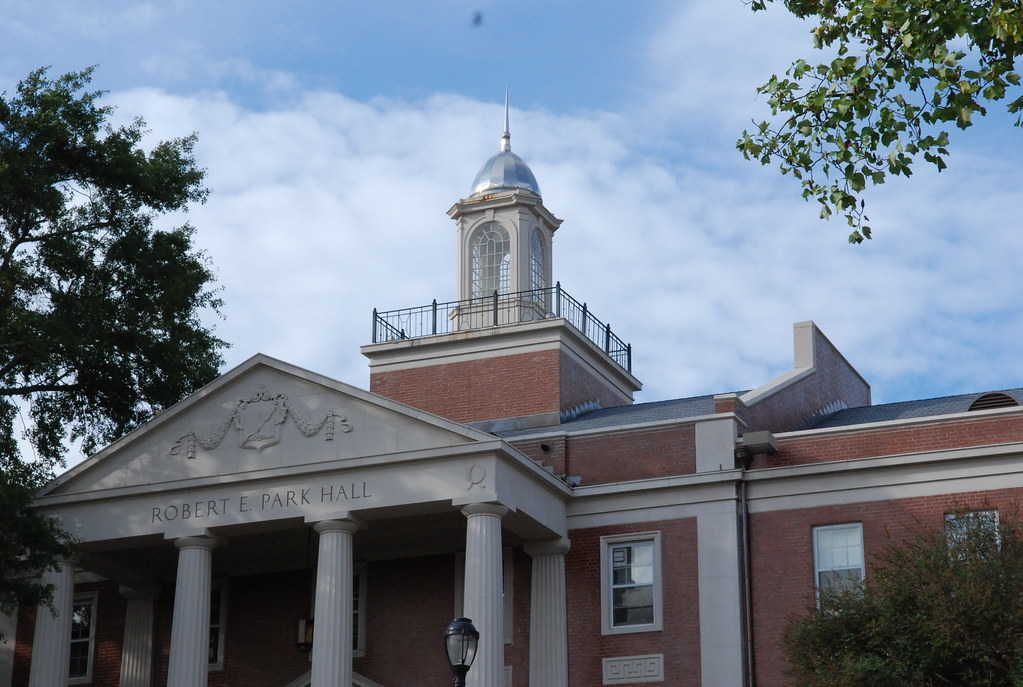
The Morehead Honors College at the University of Georgia is home to about 2,800 undergraduate students. The university has produced nearly 30 Rhodes Scholars and numerous recipients of other prestigious awards and fellowships. While UGA’s overall acceptance rate is around 33%, Morehead’s is undoubtedly lower; the 2025 incoming class had an average GPA of 4.3. All Early Action applicants are automatically considered for Morehead; those who aren’t accepted (and Regular Decision applicants) complete a supplemental application.
All first-years must take HONS 1000H: Introduction to Honors, a course that builds community and helps students identify college and career goals. Each seminar is supported by an Honors Teaching Assistant, an upperclassman who gives advice and guidance. Beyond this introduction, students can enroll in a number of honors-exclusive courses as well as graduate-level courses.
There are a number of scholarship opportunities for Morehead students. For instance, the Honors International Scholars Program provides up to 100 scholarships annually for overseas opportunities, including research and internships. There’s also the Foundation Fellowship, a prestigious grant for opportunities from individual and group travel-study to research and academic conferences. There are a number of other internal scholarships available to help Morehead students achieve their dreams.
Clemson Honors College
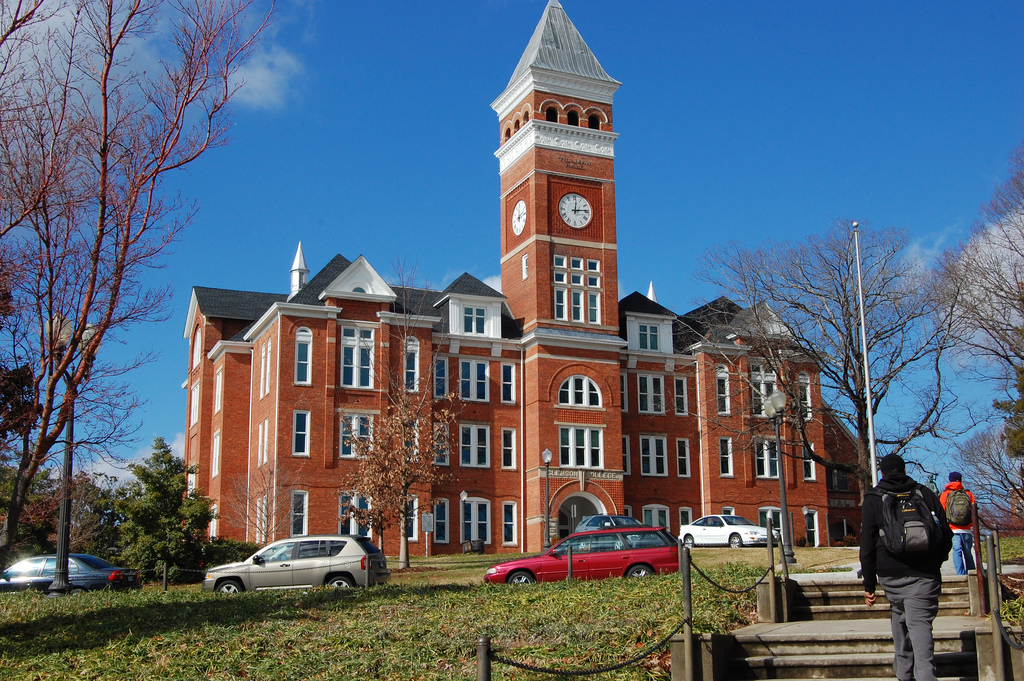
Located within Clemson University, Clemson Honors College houses over 2,000 students total. The Clemson Honors College acceptance rate isn’t public, but incoming first-years have a median unweighted GPA of 4.0. It’s safe to assume the Clemson Honors College acceptance rate is more competitive than Clemson’s 42% overall. To apply, prospective students must first complete the Clemson undergraduate application. The honors application requires two essays, a section for awards and extracurricular activities, and letters of recommendation.
Clemson offers honors students the opportunity to customize their academic experience with three curriculum tracks:
- General Honors prioritizes breadth, encouraging students to take honors courses in a variety of disciplines.
- Departmental Honors provides opportunities to do in-depth study or research in one department; it’s normally completed in junior and senior year.
- Interdisciplinary Honors is an alternative to Departmental Honors that allows students to combine two or more academic disciplines.
Depending on interests and scheduling, students may complete more than one of these tracks.
Outside the classroom, Clemson Honors College students have access to a wide variety of opportunities. There are over 500 student organizations on campus, and within those are a number of honors-only groups, like for peer mentoring. Clemson students can also participate in creative inquiry programs, getting course credit for working with faculty on solutions to community challenges.
Purdue Honors College
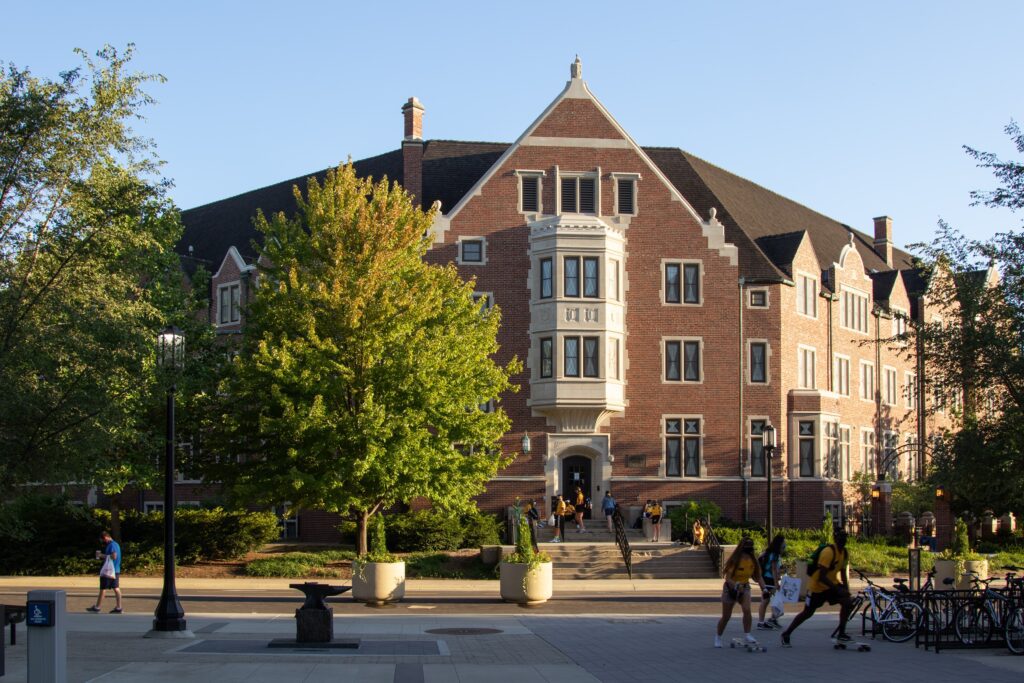
John Martinson Honors College is the only residential college at Purdue University, lending itself to a communal experience. While the Purdue Honors College acceptance rate isn’t published, the university’s overall admit rate is 43%. Considering the middle 50% of Purdue applicants have a 3.7-4.0 GPA, the Purdue Honors College acceptance rate must be quite low.
The John Martinson Honors College has four tenets for its students: interdisciplinary academics, undergraduate research, community and global engagement, and leadership development.
Research is a core component of the Purdue experience; JMHC even has research generators, communities of inquiry that explore certain topics. There are also a number of community service opportunities that get students involved in the local community and beyond.
At the John Martinson Honors College, leadership is a skill to be cultivated and nurtured. Through engaging with various leadership development opportunities on campus, students can pursue one of two leadership credentials: Lead Forward or Leadership Praxis. Lead Forward includes a fellowship granted to groups of student leaders, providing funding and coaching to enact social change. Leadership Praxis, meanwhile, requires certain courses and a research project reflecting on the student’s leadership experience.
Rutgers Honors College
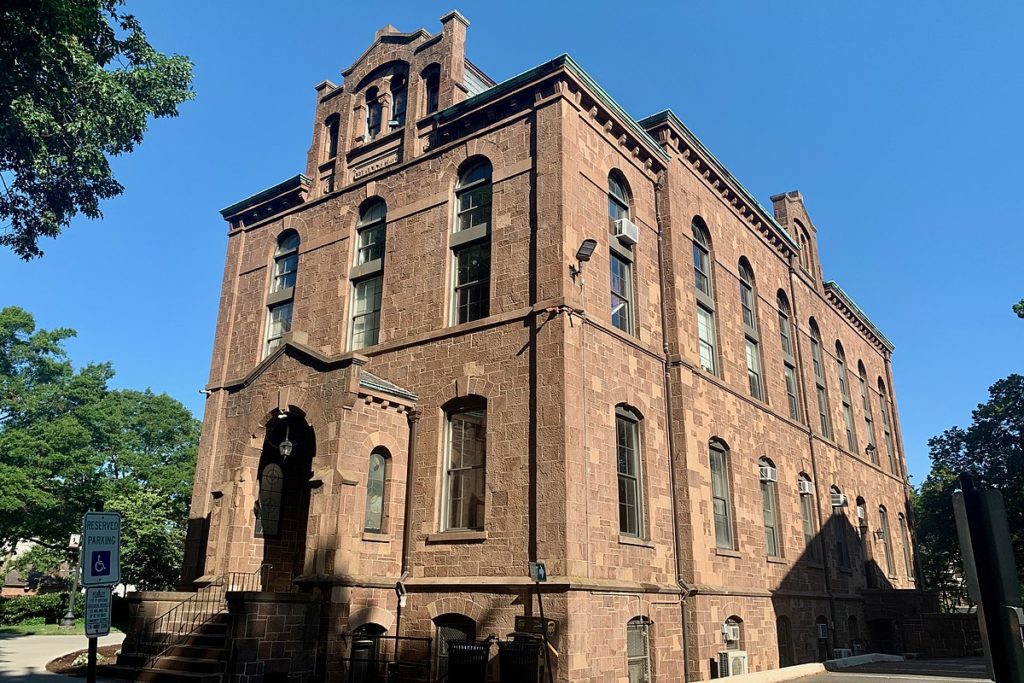
Each year, the Rutgers Honors College extends offers to about 10% of the incoming class. With the Rutgers 2025 incoming class numbering over 13,000, the honors college’s total enrollment probably numbers in the low thousands. Nevertheless, this college aims to foster a tight-knit community where people take care of each other and their community.
On the academic side, students must take an Honors Mission course; these are courses based in certain disciplines that explore fundamental questions. Mission courses are designed to provoke discussion and cultivate deep reading and critical thinking skills. They may also take Byrne seminars, first-year-only credit/no-credit courses based on the leading faculty member’s special area of expertise.
Outside the classroom, students must log at least 30 hours of service work in their first three years. Fortunately, there are a variety of service opportunities sponsored by or available through the college.
Aside from the requirements, Rutgers has lots of fun programs for honors students, like the Geek Week educational series. Twice a semester, there are also Coffeehouses where students can showcase their talents on stage.
University of South Florida Honors College

The USF Honors College, known as the Judy Genshaft Honors College, has over 2,500 students and nearly 10,000 alumni. It supports Living Learning Communities on the university’s Tampa and St. Petersburg campuses. The Judy Genshaft Honors College requires a separate application comprising a short essay and extracurricular activity descriptions.
Experiential learning is an academic priority at this honors college. Students must complete two activities, representing two of the following categories: career & leadership experience, community service, creative & artistic experience, global experience, and research.
Unique among the honors colleges we’ve seen, the Judy Genshaft Honors College rewards scholarships to students who meet requirements. By completing both experiential learning requirements and the academic curriculum — including a thesis or capstone — students can receive $2,000 total. For those seeking more, the Honors College offers accelerated degree programs and graduate admission pathway programs.
USF, as a large public university, has a lot to offer for honors students outside of class. Of course, within the honors program there are an array of events, like lecture series and poster sessions. There are even community partners such as the Tampa Museum of Art, where students can seek internship or research opportunities. But for many, the university at large — with its hundreds of student groups and organizations — can enrich campus life, too.
University of South Carolina Honors College

Last on our list is the South Carolina Honors College, which serves about 2,300 undergraduate students. Like other schools, USC requires students to submit the general application before accessing the honors application. To apply for honors, students must submit two additional essays and one recommendation letter.
The curriculum is broad, with up to 600 Honors courses offered in a given semester. On top of unique — and even quirky — classes, students have access to honors-exclusive fast track opportunities in pre-med and law. To graduate with honors, students must also fulfill an Honors Beyond the Classroom requirement, such as through internships or study abroad. As with most other honors programs, students must also complete a final thesis or capstone project.
There’s also a big emphasis on the social side of honors at USC. The Honors College has a dedicated residence hall, where students can live and learn together. Several annual events for honors students not only serve to bring students closer together, but also to introduce them to alumni. Add on to that the dozens of honors students organizations, and there’s enough community spirit for any honors student.
This is only a small selection of honors colleges in the US. There are so many more, such as Macaulay Honors College in New York, that we haven’t covered. Research universities around you to find local honors colleges in your state.
How do I apply to an honors college?
Compared to general college applications, honors colleges are more competitive and often require additional materials. Some even require a separate honors application. However, general advice for applying to universities applies.
Applying to Honors College: Useful Advice

1. Research requirements
First, figure out requirements for your schools, and gather your materials. Understand how the honors college application process works within the larger university. Do they require additional documents, or operate on a separate website? Many materials are fundamental, like high school transcripts and demographic information. If you need standardized test scores, determine if you want to retake the test(s) so you can schedule test dates. Your school guidance counselor can be indispensable in finding out how to get various application materials.
2. Get strong recommenders
Don’t overlook letters of recommendation. You should have several potential recommenders in mind, both in and out of the classroom. In advance of college application season, you should have been maintaining these relationships — their letters should speak positively and genuinely of you. Request letters well in advance, letting recommenders know what they should expect throughout the process. Don’t forget to thank them!
3. Dedicate time to your essays
Honors college applications almost universally require essays; start brainstorming and writing them early. Research essay prompts from past years and practice writing for them. For most students, essays are the most time-consuming portion of applications, so give yourself plenty of time to write and revise. Ask several people for feedback; they may have valuable advice to make your writing more readable and authentic. If you have access to college advising services, an advisor can work with you to craft strong, compelling essays.
Finally, submit everything on time. It’s no use assembling an outstanding application that highlights your leadership, curiosity, and unique experiences if you miss the deadline. If you’re contacted for interviews, prepare well and practice, practice, practice.
Is an honors college worth it?
If you’re still on the fence, you might be wondering: what is an honors college really worth? The benefits ultimately depend on your goals, and on your academic and social fit.
Honors colleges are academically rigorous, and because of their smaller size, can be very intense. Multiple discussion-based classes can mean a lot of reading and writing.
There are additional fees for some honors colleges, but on the flip side, honors students may be eligible for scholarships. See if the math works out for you and the honors colleges on your list.
Honors colleges offer unique networking and career development opportunities. Evaluate how these experiences might help you build connections and strengthen your job prospects post grad.
Clearly, the answer is anything but simple. And in some ways, it’s impossible to know exactly what an honors college experience is like without trying it. If you can, try to visit campus and talk with current honors students — they can help you decide whether an honors college is actually worth the extra commitment.
Honors College – Final Takeaways
In this article, we discussed honors colleges, their curriculum and expectations, and why they might be right for you.
- Honors colleges vs. honors programs: Honors colleges are distinct entities within a larger university, while honors programs are more loosely structured.
- What to expect: Honors colleges come with specific academic expectations, both during the admissions process and after enrollment.
- Pros and cons: The experience offers benefits like academic rigor and specialized resources, but also comes with added demands and costs.
- Real-world examples: We examined eight US honors colleges at large public colleges to show how these programs work in practice.
Found a few new schools for your college list? Still early on in your college application journey? Wherever you are, CollegeAdvisor is here to help. We have a wealth of free resources to help you figure out everything from recommendation letters to summer internships. Need a bit more guidance? Schedule a consultation today to get partnered with one of our admissions experts!

This article was written by Gina Goosby. Looking for more admissions support? Click here to schedule a free meeting with one of our Admissions Specialists. During your meeting, our team will discuss your profile and help you find targeted ways to increase your admissions odds at top schools. We’ll also answer any questions and discuss how CollegeAdvisor.com can support you in the college application process.